Arizona Cornered, Brussels Out of Breath
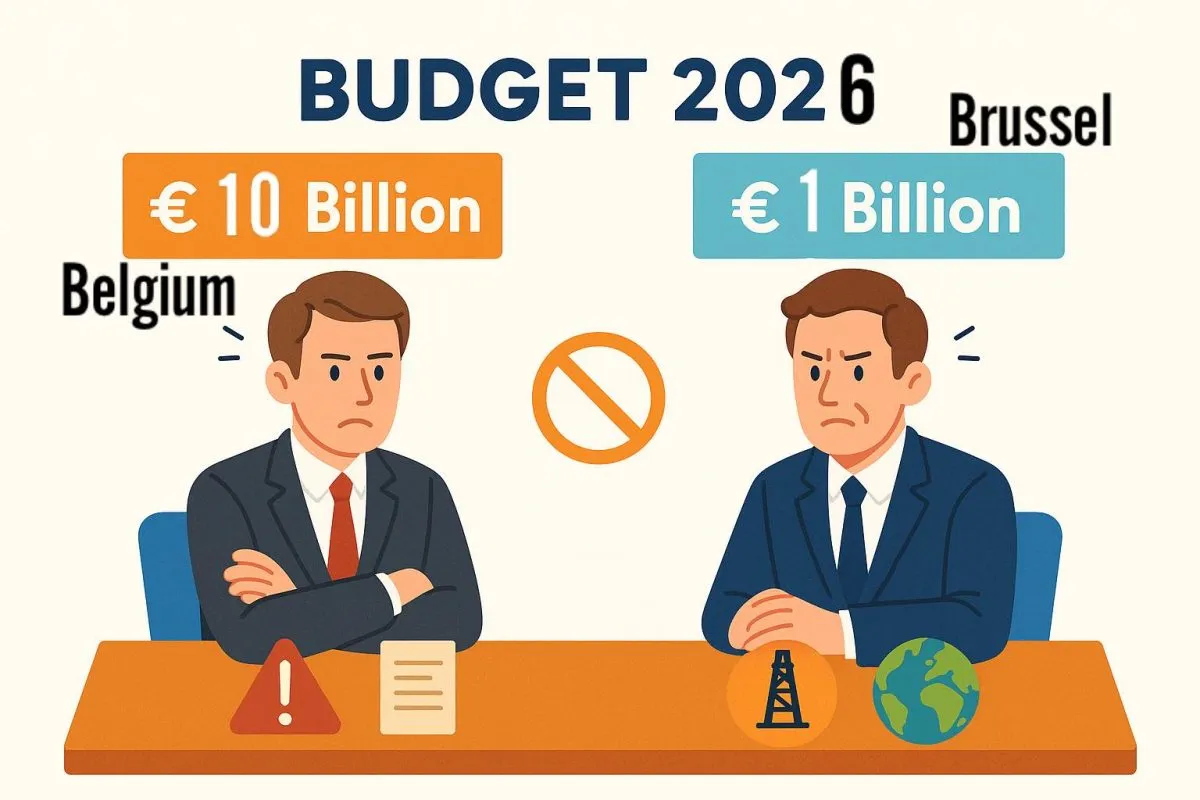
Belgium faces a dual fiscal crisis: the Federal "Arizona" government (N-VA, MR, Les Engagés, CD&V, Vooruit) is deadlocked over a mandatory €10 billion austerity plan demanded by the EU, while the Brussels Region struggles to fill a €1.5 billion budget hole without a governing majority or a budget deal.
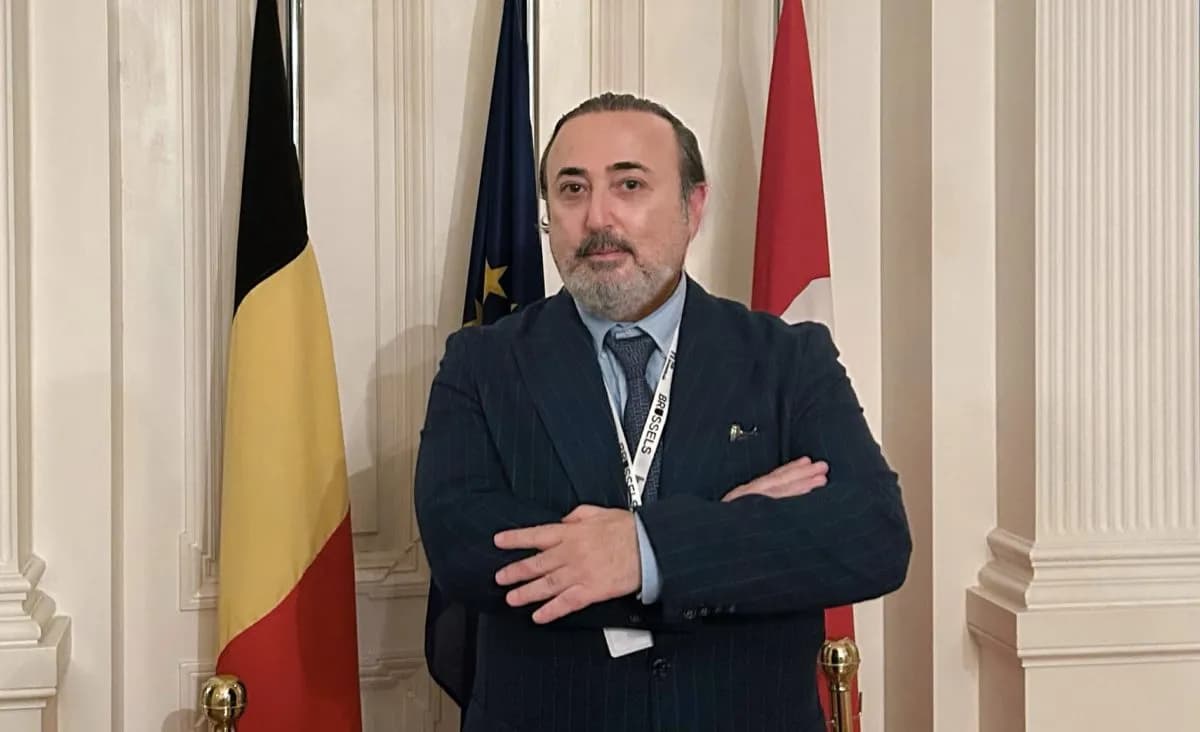
By Kadir Duran – Bruxelles Korner
The federal “Arizona” government, led by Bart De Wever, is struggling to agree on a €10 billion austerity plan demanded by the European Union and closely watched by the markets.
At the same time, the Brussels-Capital Region—deprived of a governing majority and a budget deal is desperately trying to fill a €1.5 billion hole while preserving its social model.
Two political arenas, two deadlocks, one question: who will foot the bill for a state running out of breath?
A Two-Speed Budget Crisis: Arizona Tested by Time, Money, and Credibility
Belgium is facing one of the most complex budget crises in its recent history. Two fronts are open at once: at the federal level, the Arizona coalition is struggling to agree on a €10 billion adjustment plan demanded by Brussels and scrutinized by credit rating agencies; at the regional level, the Belgian capital must bridge a €1.5 billion gap while achieving €1 billion in savings by 2029.
But that’s not all. The De Wever government must also have its “zomerakkoord” — the Summer Agreement — adopted before the end of the year. This package of major reforms must be voted through swiftly, or the entire political edifice could collapse.
A Government Trapped by the Calendar
Prime Minister Bart De Wever (N-VA) finds himself in an unprecedented situation: he has still not been able to deliver his general policy statement to Parliament due to a lack of budgetary agreement among the five coalition parties — N-VA, MR, Les Engagés, CD&V, and Vooruit.
Parliament has set a strict deadline: November 6. If missed, it will be impossible to vote the budget before December 31, forcing the country into a system of “provisional twelfths” — month-by-month management that paralyzes new initiatives and damages Belgium’s credibility on financial markets.
The urgency is double. Beyond the budget, the government must also adopt a series of laws stemming from the Summer Agreement, scheduled to take effect on January 1, 2026. These reforms cover taxation, pensions, the labor market, and healthcare. Without quick approval, the entire plan risks going up in smoke.
The Summer Agreement: Seven Reforms Under Pressure
A 10 % capital gains tax
A major victory for the Flemish socialists of Vooruit, this tax targets profits made on shares, life insurance, cryptocurrencies, and currencies. The problem: banks must record the value of their clients’ assets on December 31, 2025 — yet the implementation rules remain vague. Without clear instructions, technical chaos looms.
A tax boost for workers
The reform gradually increases the tax-free income allowance from €10,910 to €15,300 by 2029. Family allowances will rise, the special social security contribution will fall, and new measures will support self-employed individuals while discouraging the overuse of management companies.
Pension reform: a race against time
Starting in January 2026, a bonus-malus system based on career length is to be introduced. But the Federal Pension Service warns that without swift legal texts, it will be impossible to adapt software and calculations in time. A second phase, due in 2027, would restrict early retirements and harmonize regimes across employees, self-employed workers, and civil servants.
Long-term illness: €1.8 billion in targeted savings
Belgium spends between €14 and €15 billion per year on long-term sick leave. The government wants to recover €1.8 billion through stricter controls and greater employer and health-fund accountability. Health Minister Frank Vandenbroucke (Vooruit) aims to integrate these measures into a framework law by mid-November an ambitious timetable, to say the least.
Labor market flexibility: toward 80 % employment
The goal is clear: achieve an 80 % employment rate by 2029. To do so, the Arizona coalition plans to extend night work, shorten notice periods, standardize overtime rules, and expand flexi-jobs. But the Council of State has struck down several provisions, citing violations of ILO conventions on night-work compensation. Back to square one and another delay.
Healthcare reform: moving full speed ahead
Frank Vandenbroucke is also leading a major overhaul of the healthcare system: capping medical fee supplements by 2028, introducing new rules for physician contracts, and tightening budget control. He has already begun enforcing some measures before parliamentary approval, angering the medical community.
A €34 billion military plan
The future defense programming law includes massive investments: eleven additional F-35s, frigates, drones, armored vehicles, cybersecurity, and space capabilities a record-high envelope requiring parliamentary approval before 2026.
Arizona’s Impossible Bet
The De Wever government faces a double challenge: finalize a credible federal budget before December 31 while pushing through a package of structural reforms in an already overloaded Parliament — all before Christmas.
Every day of delay undermines the implementation of promised reforms and weakens political stability. Without a rapid compromise, Belgium risks both political paralysis and a downgrade of its sovereign credit rating.
At both the federal and regional levels, the dilemma is the same: reform without breaking, save without suffocating. But until someone clearly admits who will pay the price, no lasting deal can emerge. The Arizona coalition’s credibility hangs by a thread — and time is running out.
Inside the Brussels Parliament: A Budget Crisis Out of Breath
At the Brussels Parliament, the situation is political, financial, and symbolic. While the federal government stalls, the capital region faces near-total institutional paralysis. Negotiations led by David Leisterh (MR) to form a new regional government and agree on a consolidation plan are at a “clinically dead” point, according to several internal sources.
Negotiations at a standstill
For weeks, six Brussels parties (MR, PS, Les Engagés, Open VLD, Vooruit, and Groen) have been discussing a plan to reduce the deficit from €1.5 billion to €500 million by 2029 — an effort of €1 billion. Yet each meeting ends late at night without tangible results.
The main stumbling block: balancing budgetary discipline with social protection. MR insists on strict fiscal consolidation inspired by sound-management rules — freezing municipal grants, slowing public hiring, cutting discretionary subsidies, and reviewing public-transport and regional service fees. PS, led by Ahmed Laaouej, refuses any measure that would harm the most vulnerable. For socialists, the liberal proposals amount to “blind austerity.”
A further dispute concerns a €300 million budget provision in the 2025 draft budget. MR calls it an accounting gimmick that must be corrected; PS argues it is already part of the consolidation effort. The gap widens further.
A Parliament in slow decay
While negotiators clash, the Brussels Parliament is barely functioning. Committees are running empty. A telling scene made headlines recently: during an internal-affairs committee session, Minister-President Rudi Vervoort (PS) answered questions before just four MPs — some of whom left the room before hearing his response.
Vervoort described it as a “depressing spectacle,” smelling of “end of reign.” Tensions over security, crime, and urban policy between the N-VA and PS dominate debates. The result: a paralyzed legislature and growing stacks of unresolved files.
Leisterh’s “final offer” rejected
David Leisterh’s latest proposal — presented as his “Best And Final Offer” — included tough measures: cuts to municipal funding, subsidy reductions, higher garbage-bag prices, limited wage indexation in the public sector, higher transport fares for non-Brussels residents, and savings on the Kanal museum and urban-renewal projects.
The PS rejected the text, arguing it would further weaken middle- and working-class households. MR accuses the socialists of blocking structural reforms and ignoring fiscal reality.
A slow-burn political crisis
The malaise goes far beyond the budget. Brussels has been run by a caretaker government for over 500 days, amid growing fatigue: absentee lawmakers, partisan squabbles, and waning public trust in regional institutions. Liberals denounce a “lack of political courage,” while socialists accuse them of trying to “dismantle Brussels’ social model.”
The risk is now twofold: financial, if the Region fails to present a credible budget — driving up borrowing costs; and institutional, if no coalition is formed by year-end, threatening political continuity and public investment.
A Vital Yet Exhausted Capital
The Brussels paradox remains stark: according to the National Bank of Belgium, the region is the country’s most productive, yet also its most socially fragile. Every day, over 400,000 commuters from Flanders and Wallonia work in Brussels taking their income tax revenue back home. The result: Brussels creates wealth but cannot retain it.
And while the federal level battles to avert a “budgetary shipwreck,” the capital region risks slowly sinking under the weight of political paralysis. The Brussels Parliament is nearly frozen. The regional government still doesn’t exist. Mutual distrust between MR and PS blocks any progress. Institutional fatigue has reached a breaking point.
Brussels the economic lung of the country now looks like a capital gasping for air, unable to choose between fiscal rigor and social solidarity.
Kadir Duran
Contributing writer at EUReflect.
Follow EUReflect
See more of our reporting on Google
Mark EUReflect as a preferred source and our stories are ranked higher for you in Top Stories, Discover and Google News — and carry a “preferred” badge when they are cited in AI results.
Add EUReflect as a preferred source