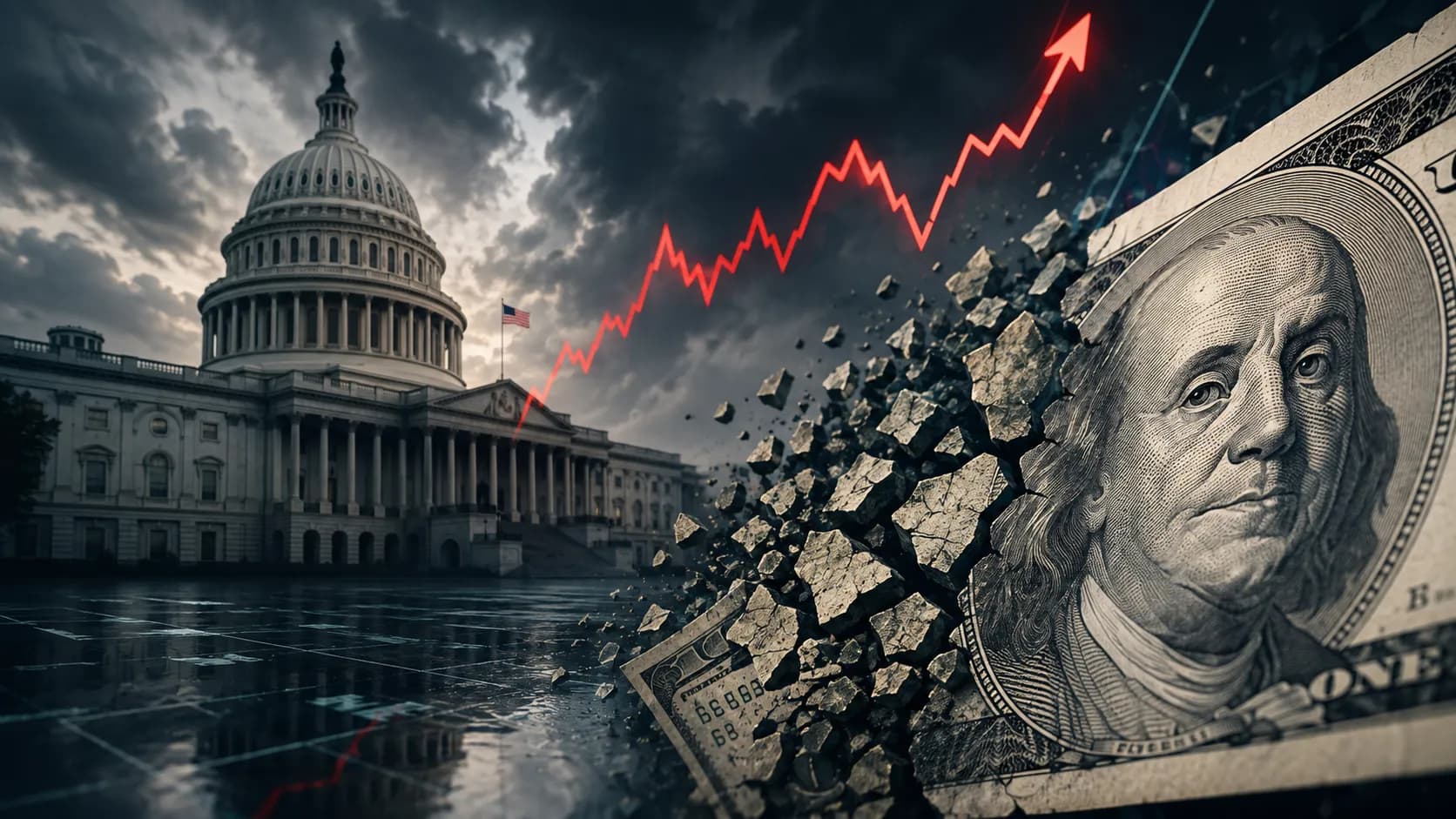
The End of Western Dominance: Asia’s Rise and the Emerging New World Order
Spain and France refused overflight rights for U.S. warplanes during the Iran campaign, while central banks bought gold at rates unseen since the 1960s as oil producers dumped Treasuries.
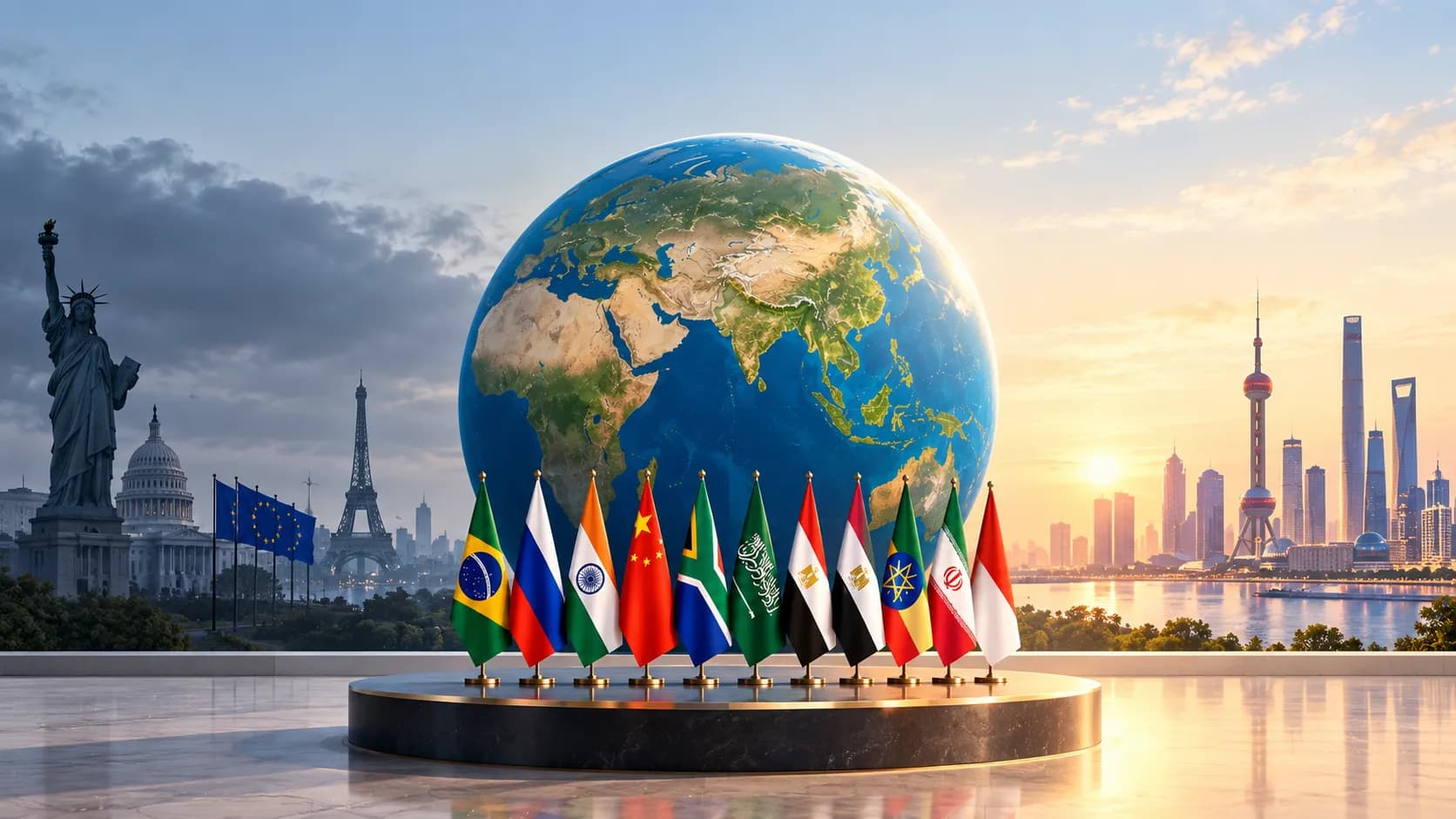
As the 18th BRICS Summit opens in New Delhi on September 12, 2026, the global economic power map is being redrawn at a breathtaking pace, with the United States experiencing accelerating decline following its disastrous war against Iran, Europe contracting under the weight of stagflation and energy shocks, and Asia emerging as the world's undisputed economic engine. The U.S.-Israeli war against Iran, which erupted in February 2026, has exposed the limits of American power in devastating fashion. The military campaign consumed one-third of America's 3,000-unit Tomahawk cruise missile inventory, while Spain and France refused to allow U.S. warplanes to overfly their territory, signaling deep fractures within NATO. The old rule that capital rushes to the dollar as a safe haven during crises failed for the first time, as Middle Eastern oil producers and oil-importing countries dumped U.S. Treasuries in massive quantities, and central banks accelerated gold purchases at rates unseen since the 1960s.
America's economic toll from the Iran war
The economic toll on America has been severe. U.S. real GDP growth was revised down to just 1.6 percent in the first quarter of 2026, while the average American household has spent an extra 447 dollars per month on energy since the war began. Labor income as a share of GDP dropped to 51 percent, the lowest since records began in 1947, and approval ratings for the administration stuck at a mere 37 percent even as the ultra-wealthy saw stock markets hit record highs. The war was supposed to restore American credibility but instead revealed a superpower stretched too thin, unable to impose its will on a determined adversary without incurring unacceptable costs. This accelerated a structural decline that had been underway for decades, from representing one-third of global GDP in 1970 to just 25 percent today, with the dollar's share of global reserves still dominant at 57 percent but showing the first significant cracks in confidence.
Europe's passive shrinkage and stagflation
Europe finds itself in a state of passive shrinkage, pushed into stagflation by a conflict it cannot control. The European Commission projects EU GDP growth slowing to just 1.1 percent in 2026 while inflation hits 3.1 percent, with Germany barely growing at 0.5 percent and France experiencing zero growth as household consumption shrinks. The effective closure of the Strait of Hormuz sent natural gas prices up 50 percent and crude oil prices surging 65 percent from February to April, exposing Europe's energy vulnerability. In 2008, the EU economy was 10 percent larger than America's, but by 2023 it had shrunk to just 67 percent of U.S. GDP, and today accounts for only 18 percent of global GDP. Only 4 of the world's top 50 tech companies are European, and labor productivity grew at just 2.4 percent between 2019 and 2024 compared to America's 9.7 percent. The continent finds itself caught between an unreliable American ally dragging it into conflicts and a rising China competing in technology and manufacturing, with 50 percent of its economy dependent on exports making it the biggest loser in any trade war. The abandonment of cheap Russian energy in favor of expensive U.S. LNG has proven to be a self-inflicted wound that continues to bleed.
Asia's unstoppable economic rise
In stark contrast, Asia is experiencing an unstoppable rise, with nominal GDP in 2026 projected at approximately 44.85 trillion dollars, comfortably ahead of North America's 37.89 trillion and Europe's 32.33 trillion. Asia's share of global GDP on a purchasing power parity basis will rise from 49.2 percent to 49.7 percent, serving as the main engine of global economic growth. Emerging Asian economies are outperforming all others, with Barclays raising its 2026 growth forecast to 5.2 percent, the IMF projecting 4.9 percent, and country-specific figures showing Vietnam at 7.1 percent, India at 6.4 percent, China at 4.6 percent, and Taiwan region at 9 percent, while the Asian Development Bank forecasts 5.1 percent GDP growth for emerging Asia-Pacific.
The expanded BRICS bloc, now with 11 members, represents 40 percent of global GDP and in purchasing power parity terms produces 88 trillion dollars compared to the G7's 62 trillion. BRICS countries are averaging 3.7 percent growth in 2026 against just 1.1 percent for the G7, a more than three-fold gap, while the G7's share of global GDP has fallen from 49.5 percent to 43.8 percent and BRICS plus has risen from 21.7 percent to 29.1 percent. The BRICS Pay initiative represents a significant institutional innovation, offering a decentralized payment messaging infrastructure for central bank digital currencies that provides technical interoperability without political integration, serving as a sanctions-resistant alternative to SWIFT and offering a mutual defense pact against extraterritorial sanctions.
Tensions and risks in the transition
However, this transformation is not without tensions and risks. The United States still leads in nominal GDP at 32.38 trillion dollars representing 25.6 percent of the global total, but its advantage is narrowing and the Iran war accelerated this decline by exposing military overstretch, fracturing alliances, and undermining confidence in the dollar. Europe's decline owes much to external shocks but also to its own poor choices, and without a unified foreign policy or competitive technology sector, the continent risks becoming a museum of history rather than a builder of the future. Asia's rise masks enormous internal disparities, with per capita output of about 70,000 dollars in North America compared to only 9,600 dollars in Asia, and growth across emerging economies is increasingly uneven. Despite its economic weight, the Global South still lacks commensurate institutional influence, with the United States retaining veto power over key IMF decisions with roughly 16.5 percent of votes while more than 40 sub-Saharan African members together command less than 5 percent of voting power.
BRICS itself is not a monolith, as India remains cautious caught between its Quad alliance with the West and BRICS membership, and China's growing influence raises concerns among other members about potential dominance. The data reveals a clear picture, with the U.S. global GDP share having declined from 33 percent to 25 percent since 1970, Asia having overtaken North America and Europe combined in nominal GDP terms, BRICS plus out-producing the G7 in purchasing power parity terms with more than three times the growth rate, and Europe's relative decline being the most dramatic. For the United States, the Iran war has accelerated the erosion of American power, deepening military overstretch, allied fractures, dollar dumping, and domestic inequality, and each future crisis will likely accelerate this erosion further. For Europe, a stark choice looms between continuing to sleepwalk into irrelevance dependent on an unreliable American ally or waking up to invest in technology, unify foreign policy, and build genuine strategic autonomy, though the window for the latter is closing rapidly.
Burdens of Asian leadership
For Asia, the responsibility of leadership comes with burdens of addressing rising inequality and building fair, transparent, and inclusive institutions, with the region needing to avoid simply inheriting the old order's flaws while benefiting from its privileges. For the world, a multipolar order is emerging with multiple centers of power and no single hegemon, potentially bringing greater balance and representation but also risks of coordination challenges, fragmentation of global public goods, and more frequent regional conflicts, as the transition from unipolarity to multipolarity is historically fraught with instability. In September 2026, the world stands at a historic inflection point. The unipolar moment of the United States is over, Europe is sleepwalking toward economic and political marginalization, and Asia, with 49.7 percent of global GDP and growth rates above 5 percent, is becoming the undisputed new center of the world economy.
But the birth of a new order is never smooth, and the real test is whether Asia and the BRICS can convert economic weight into institutional voice and whether the emerging order will be more inclusive, equitable, and stable, or merely a new hierarchy with different gatekeepers. The old order where America set the rules, Europe followed, and the rest listened is dying, and what comes next is a multipolar world where no single country or bloc calls all the shots.
This is not the end of the West but the end of Western dominance, and the answers to the questions of this transition will unfold over the next decade, with the 2026 BRICS Summit in New Delhi serving as just another milestone in this historic transformation being written from the East for the first time in centuries. The world is changing, and whether that change brings chaos or opportunity depends on the choices made in the coming years. Let history judge those choices wisely.
Uroosa Khan
Contributing writer at EUReflect.
Follow EUReflect
See more of our reporting on Google
Mark EUReflect as a preferred source and our stories are ranked higher for you in Top Stories, Discover and Google News — and carry a “preferred” badge when they are cited in AI results.
Add EUReflect as a preferred source