Carrefour Belgium in Turmoil
When the Traditional Economy Can No Longer Cover Fixed Costs

When the Traditional Economy Can No Longer Cover Fixed Costs
By Kadir Duran – Bruxelles Korner
For years, Carrefour embodied the image of an indestructible retail giant: sprawling hypermarkets, thousands of employees, and an omnipresent footprint in Belgium’s commercial landscape.
Today, that model is cracking. Severely.
Multiple warning signs are converging: weak profitability, union pressure, market saturation, rising costs across the board, and above all, a traditional economic model that can no longer pay for its own fixed costs.
To the point where even Carrefour the country’s third-largest retailer is reportedly considering all scenarios, including a progressive withdrawal from Belgium.
How did we get here?
And is Belgian economic policy partly responsible?
Yes. More than most people think.
1. The traditional economy no longer covers its costs: the equation has become impossible
Physical retail depends on one simple rule:
Fixed costs must be covered by sales volume.
In Belgium, that equation no longer works.
Major stores now face:
✔️ Some of the highest wages in Europe
With a labour cost around €30/hour in hypermarkets, the model becomes structurally loss-making if turnover drops by just 3% to 5%.
And that is precisely what’s happening.
✔️ Commercial rents that have never decreased
Huge retail spaces inherited from the 1990s have turned into financial anchors no operator wants to carry.
✔️ Energy and maintenance costs that have exploded
Heating, lighting, refrigeration…
Every spike in gas or electricity prices translates into millions in additional yearly expenses.
✔️ Competitors who crush prices without hesitation
Aldi, Lidl, Action, Primark, and above all e-commerce have drained profit margins dry.
The hypermarket model can’t keep up.
Even with higher sales, margins have collapsed.
Even with volume, profitability no longer returns.
2. Why Carrefour Belgium is considering… the almost unthinkable
Carrefour Belgium today:
is profitable at the EBITDA level,
but fails to generate a positive net result,
operates hypermarkets where 50% are losing money,
is trapped between unions, taxation, and brutal competition.
For a listed multinational, the question has become cold and mathematical:
“Why struggle so much in a market that is this small and this expensive?”
Hence the hypothesis of a gradual exit even if the company officially denies it.
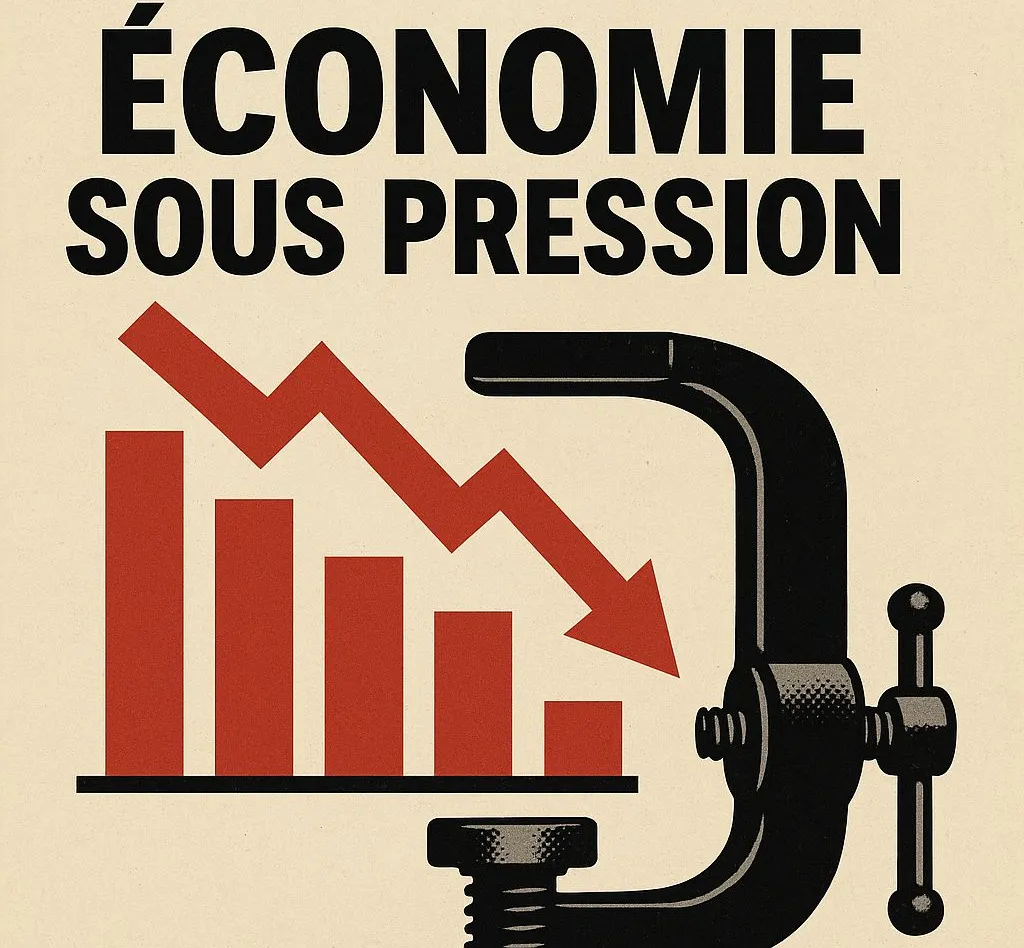
3. Yes, Belgian policy plays a role ? a major one
Like it or not, the facts are clear:
Belgium is one of the hardest countries in Europe in which to run a profitable large store.
Here’s why:
🔸 1. The cost of labour: structurally too high
With automatic wage indexation, payroll can jump by 8%, 10%, even 11% in a single year.
In a sector with margins below 2%, this destroys profitability mechanically.
🔸 2. Even small VAT increases destabilize the model
Whether on energy, horeca, or other categories, every +1% or +2% creates:
reduced consumption,
price increases,
lower volume,
lower margin.
Belgium underestimates the impact of micro tax adjustments in ultra-sensitive sectors.
🔸 3. A tax on capital gains: disastrous for investors
If Belgium introduces taxes on:
capital gains,
dividends,
or share buybacks…
foreign shareholders who finance these groups may simply say:
➡️ “Exit this market.”
In Carrefour’s case, this could accelerate key decisions.
4. The real question: Is Belgium killing its own retail sector?

Carrefour is not an isolated example.
Other sectors suffer from the same structural weaknesses:
horeca
pharmacies
petrol stations
textile shops
bookstores
small independent retailers
Belgian economics is built on a model that is:
✔️ highly protective for workers (positive)
❌ extremely burdensome for businesses operating on razor-thin margins
Food retail is the sector where this contradiction is most visible and most brutal.
Conclusion: If even Carrefour wavers, the entire model must be reconsidered
Carrefour Belgium is not on the verge of bankruptcy.
But Carrefour Belgium is sending a loud, unmistakable warning:
➡️ The traditional economy no longer covers fixed costs
➡️ Hypermarkets cannot survive with a 1990s business model
➡️ Belgian taxation weighs heavily too heavily
➡️ International shareholders will not wait forever
Carrefour has become a symbol a real-time test of Belgium’s ability to reform an economic model that has become too costly, too rigid, and too slow to adapt.
Kadir Duran
Contributing writer at EUReflect.
Follow EUReflect
See more of our reporting on Google
Mark EUReflect as a preferred source and our stories are ranked higher for you in Top Stories, Discover and Google News — and carry a “preferred” badge when they are cited in AI results.
Add EUReflect as a preferred source