Health Goes High-Tech
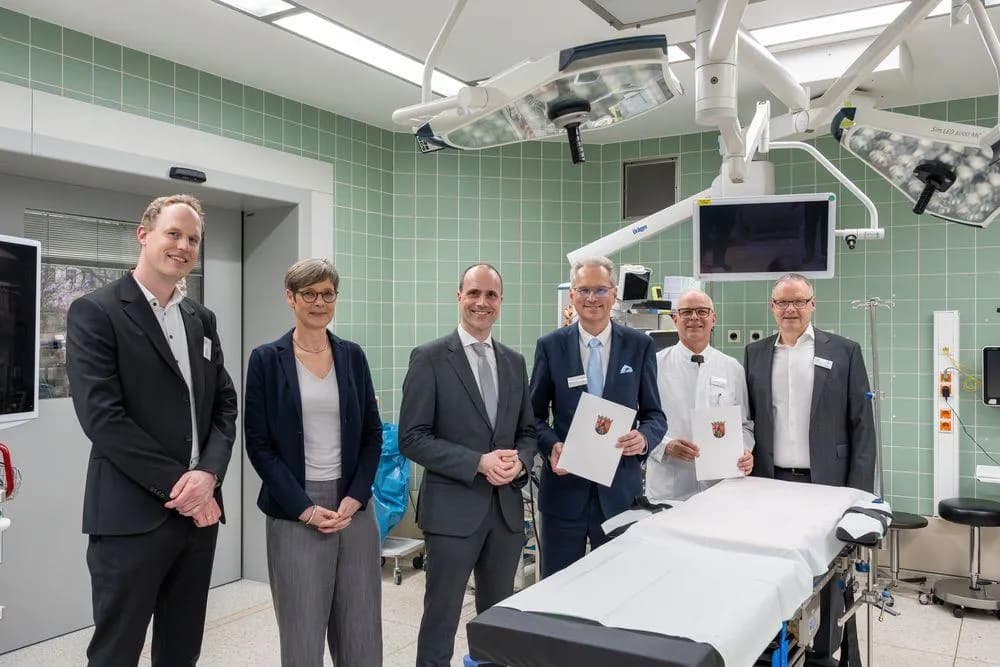
The Global Digital Health Certification Network now spans 82 countries, giving around 2 billion people access to digital health records.
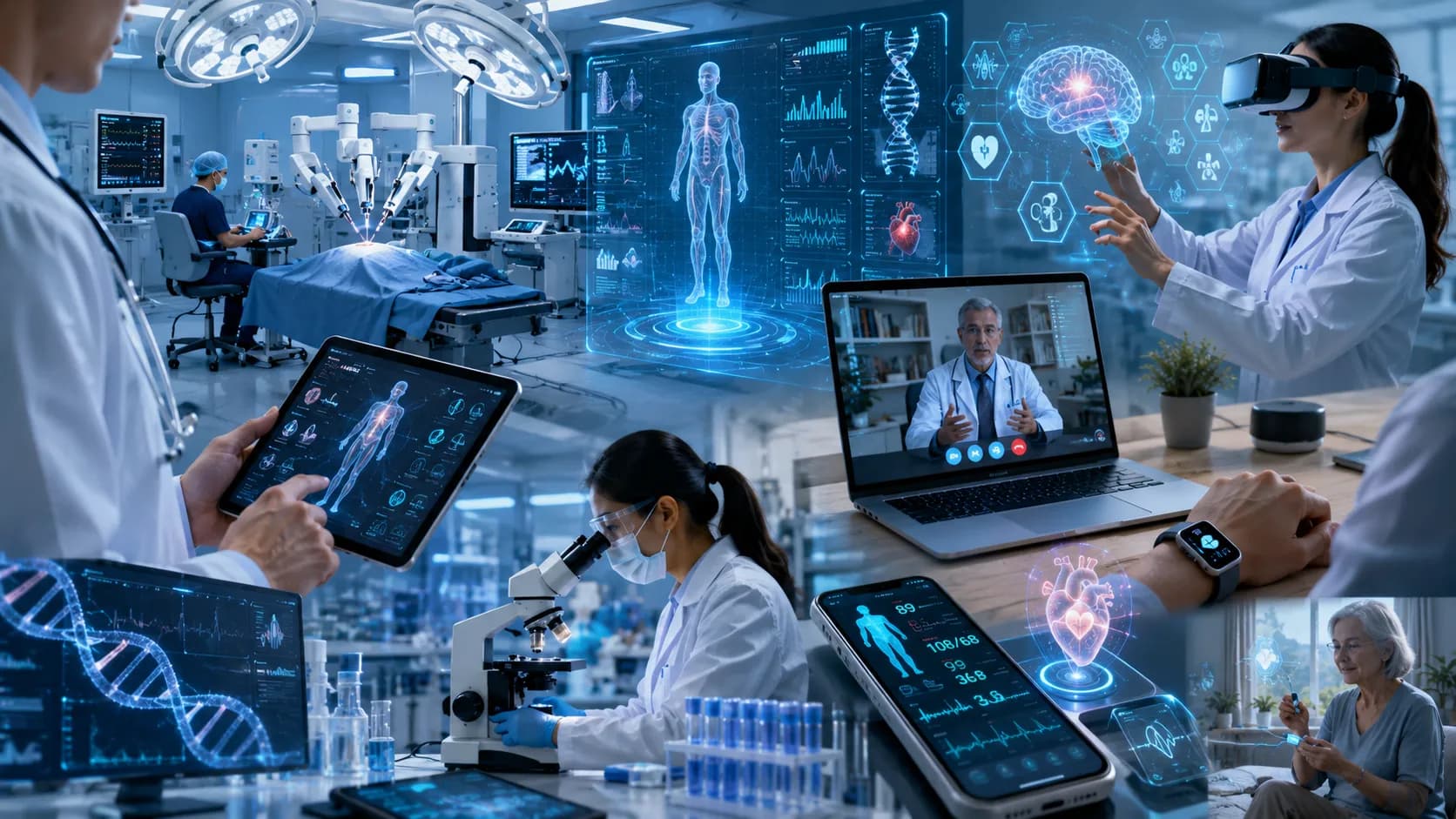
Healthcare is entering a new technological era. In 2026, artificial intelligence, robotic surgery, genomic analysis, wearable sensors, remote medicine and digitally connected health records are moving from experimental projects into everyday healthcare systems.
The transformation is increasingly visible at the international level. The World Health Organization says digital technologies can make health systems more efficient, sustainable and accessible, while its 2026 work increasingly focuses on integrating artificial intelligence into national health systems safely. (Dünya Sağlık Örgütü)
AI Moves Into Diagnosis
One of the fastest-moving areas is medical diagnosis.
Artificial intelligence systems can analyze X-rays, CT scans, MRIs, retinal images and other medical data, helping physicians detect abnormalities and prioritize high-risk cases.
The scale of adoption is becoming significant. WHO reported in April 2026 that nearly three-quarters of EU countries were already using AI-assisted diagnostic technologies, including applications for medical imaging, disease detection and clinical decision support. (Dünya Sağlık Örgütü)
AI is also expanding beyond image recognition. New-generation systems are being studied for clinical decision support, medical report generation, patient communication and hospital management. A 2026 review in npj Artificial Intelligencehighlighted the rapid emergence of AI agents across precisely these areas. (Nature)
The objective is not necessarily to replace physicians. Increasingly, the model is to give doctors a second digital layer of analysis capable of processing quantities of information that would be difficult for a human to examine simultaneously.
Robots Enter the Operating Room
Robotic technology is changing surgery as well.
Modern robotic systems can translate a surgeon's movements into extremely precise actions inside the patient's body. Combined with advanced imaging and digital planning, they can support minimally invasive procedures and potentially shorten recovery times in appropriate cases.
The next stage could be even more significant: remote surgery.
WHO and the Society of Robotic Surgery launched an international initiative to expand access to virtual care and telesurgery, with particular attention to underserved regions. (Dünya Sağlık Örgütü)
If communications infrastructure becomes sufficiently reliable, specialist expertise could eventually travel digitally rather than requiring every specialist to be physically present in the same city as the patient.
Health Records Become Global Digital Infrastructure
Healthcare is also becoming increasingly connected.
In February 2026, WHO said its Global Digital Health Certification Network had expanded to 82 countries, enabling around 2 billion people to access health records through national digital health wallets. (Dünya Sağlık Örgütü)
This development is less visually dramatic than robotic surgery or AI diagnosis, but potentially just as important.
Digital records can allow physicians to understand a patient's medical history more quickly, reduce repeated examinations and improve continuity of care when patients move between institutions or countries.
The longer-term possibility is a healthcare system in which medical information follows the patient rather than remaining trapped inside individual hospitals.
Genomics Pushes Medicine Toward the Individual
Advances in genetics and computational biology are simultaneously moving healthcare away from a one-treatment-fits-all model.
Genomic information can help physicians understand why patients with apparently similar diseases respond differently to the same medication.
Artificial intelligence can accelerate this process by comparing genetic, clinical and biological information. Recent research describes potential applications ranging from genomics-informed drug selection to increasingly personalized digital models of patients. (Nature)
Cancer treatment is one of the areas where this approach could have particularly important consequences.
Instead of classifying a tumor primarily according to where it appears in the body, medicine can increasingly examine its molecular characteristics and select therapies accordingly.
The Hospital Is Moving Into the Home
Another major change is taking place outside hospitals.
Smartwatches, connected medical devices and wearable sensors can continuously collect information such as heart rate, activity and other physiological signals.
This creates the possibility of moving healthcare from occasional measurements toward continuous monitoring.
A traditional patient may visit a physician every few months. A digitally monitored patient can potentially generate health information every day.
When combined with AI, abnormal patterns could eventually trigger warnings before a condition becomes severe enough to require hospitalization.
For ageing societies and patients with chronic diseases, this could become one of the most important applications of digital medicine.
Technology Could Reduce the Geography of Healthcare
The biggest impact may ultimately be felt in places where specialists are scarce.
A sophisticated hospital in a major city may have radiologists, cardiologists and other specialists available around the clock. A rural clinic may not.
AI-assisted diagnostics, telemedicine and remote specialist consultations can partially reduce that geographical inequality.
Ghana, for example, launched an AI-driven health programme with WHO and UNDP in May 2026 aimed at strengthening its health system and improving outcomes for vulnerable populations. (WHO | Regional Office for Africa)
For developing countries, this could be transformative.
Technology cannot create thousands of specialist doctors overnight, but it can potentially allow existing specialists to support many more locations.
Drug Discovery Is Becoming Computational
Technology is also changing what happens before a medicine reaches a patient.
Traditional drug development requires scientists to examine enormous numbers of biological interactions and potential molecules. AI can help narrow this search by identifying promising compounds and predicting biological relationships.
This does not eliminate laboratory experiments or clinical trials.
Instead, computing can help researchers decide which possibilities are worth testing first.
The result could be a pharmaceutical research process in which biology, data science and artificial intelligence become increasingly interconnected.
The Risks Grow With the Technology
The transformation also creates new problems.
Medical information is among the most sensitive categories of personal data. As hospitals accumulate enormous digital datasets, cybersecurity and privacy become critical components of patient safety.
A 2026 Nature study warned that medical AI systems can expose patient information to privacy attacks, highlighting the importance of protecting the datasets used to train healthcare algorithms. (Nature)
There is also the risk of incorrect AI recommendations, biased training data and excessive reliance on automated systems.
WHO therefore continues to emphasize governance, ethics, patient safety, data protection and human clinical oversight as AI adoption expands. (Dünya Sağlık Örgütü)
From Treating Disease to Predicting It
The most important technological change in healthcare may ultimately be philosophical.
Traditional medicine often begins after symptoms appear.
Digital medicine increasingly aims to identify risk earlier.
Genomics can reveal predispositions. Wearables can monitor physiological changes. AI can search medical images for subtle abnormalities. Digital records can reveal long-term patterns. Remote monitoring can follow patients between hospital visits.
Connect these technologies, and healthcare begins moving from “What disease does this patient have?” toward another question:
“What is likely to happen to this patient next, and can we intervene before it happens?”
That transition—from reactive treatment toward increasingly predictive and personalized medicine—could become one of the defining healthcare transformations of the coming decade.
Ahmet Balakan
Contributing writer at EUReflect.
Follow EUReflect
See more of our reporting on Google
Mark EUReflect as a preferred source and our stories are ranked higher for you in Top Stories, Discover and Google News — and carry a “preferred” badge when they are cited in AI results.
Add EUReflect as a preferred source