US-led group to swap $10bn in frozen shares for Lukoil's foreign assets
Todd Boehly's Eldridge, the US government's development finance agency and a UAE investor are behind the bid, which still needs a US Treasury licence. The Balkans' largest refinery, at Burgas, and possibly Lukoil's stakes in Kazakh oilfields hang on the outcome.
Lukoil's three European refineries, its oil output in 11 countries and more than 2,000 filling stations are set to leave Russian ownership after a US-led consortium signed a definitive agreement on 25 November to buy Lukoil International GmbH. The buyers will pay with Russian shares that Western funds have been unable to sell since 2022, so no cash reaches Moscow, and the US government takes a stake in the business.
The deal still needs a licence from the US Treasury's Office of Foreign Assets Control (OFAC). Two earlier deals for the same assets stalled at that step.
A swap, not a sale for cash
According to the consortium's announcement on Business Wire, the group will hand over restricted shares in PJSC Lukoil and other Russian companies in return for 100% of the equity in Lukoil International. The Russian side cannot touch that payment for five years, or until sanctions end if sooner: it is locked in a restricted custody account.
Eldridge, the holding company chaired by Todd Boehly, leads the group. Its partners are the US International Development Finance Corporation (DFC), Washington's overseas investment agency, the Emirati energy investor Catena Investment Holding, and the advisory firm Xtellus Partners. The DFC receives an ownership interest without putting in money upfront, the release says.
Boehly and a DFC official told Reuters the securities being swapped are worth $10bn, The Moscow Times reported, citing Reuters. Two people familiar with the terms put the portfolio's value at about $16bn. "We're basically exchanging shares that are worthless to Americans ... for cash that is going back to them," Boehly said.
To meet the Treasury's ban on any windfall for Lukoil, the shares will be held in escrow in the UAE rather than passed to the Russian company, one of those people said. Reuters got no reply from Lukoil.
Why Kazakhstan and Bulgaria are watching
Boehly told Reuters the shares were being turned "into a real asset portfolio that sits in the hugely critical Middle Corridor that connects Central Asia into Europe that runs south of Russia and north of Iran".
What exactly sits in Central Asia is the open question. The release lists Central Asia among the regions where Lukoil International operates and has filling stations, without naming fields. Reuters reported that the portfolio includes major oilfields in Azerbaijan and Kazakhstan. Yet when Lukoil agreed to sell the same company to Carlyle in January, it stated that the deal did not include its Kazakh assets, which were to stay with the Lukoil group. This week's release does not say whether that carve-out still applies.
Astana has staked its claim. Energy Minister Yerlan Akkenzhenov said on 28 January 2026 that his ministry had sent a request to OFAC about buying out Lukoil's share in joint projects, and that "we have a preemptive right under law" to do so if Lukoil sells its Kazakh assets, Interfax reported. He said payment could be deferred or made from future oil sales. Tengiz, Karachaganak and the Caspian Pipeline Consortium (CPC) hold exemptions from US and UK sanctions, according to the same report. The CPC line, more than 1,500 km long, mainly collects crude from the large oilfields of western Kazakhstan, its operator says.
That pipeline matters well beyond Kazakhstan: Kazakh crude kept Europe supplied after Iran blocked the Strait of Hormuz in March, and its oil is one reason Kazakhstan matters to Europe. Who owns Lukoil's share of those fields is an EU question as well as a Kazakh one.
A Rystad Energy estimate, cited by The Times of Central Asia in November 2025, put Lukoil's net cash flow over five years at $2.8bn from Tengiz and $2.1bn from Karachaganak. Uzbekistan, where Lukoil runs gas projects, stepped aside early; Uzbekneftegaz chairman Bahodir Sidikov said that "buying out Lukoil's assets in Uzbekistan is not on the table right now", the same outlet reported.
For Bulgaria the stake is a single plant. Burgas, which the consortium calls the largest refinery in the Balkans, has been run by an external administrator since 17 November 2025 under a new Bulgarian law, Lukoil said at the time. The company described itself as Bulgaria's largest investor and fuel supplier, with more than $4.5bn invested since 1999. The buyers say their first task after closing is to stabilise operations and bring refining capacity fully back online.
What the buyers get
The three refineries, Burgas, Petrotel in Romania and Zeeland in the Netherlands, can process about 350,000 barrels a day between them. Their markets run from the Black Sea and the Balkans to north-west Europe, the release says. Upstream output is about 350,000 barrels of oil equivalent a day. The package also includes the Litasco trading business and retail stations in 16 countries across Europe, North America and Central Asia. CNBC reported that the deal would let European buyers source diesel from these plants through the US-led owners instead of Russia.
The Gulf line-up changed before signing. Abu Dhabi's International Holding Company and the Syrian-Qatari Al-Khayyat brothers left the consortium last week, two people told Reuters, leaving Catena as the only Emirati partner. IHC did not respond to Reuters.
Two failed bids before this one
Washington sanctioned Lukoil in October 2025. Lukoil later wrote off its investment in Lukoil International in full, booking a 1.66trn rouble impairment and deconsolidating the unit from 21 November 2025, when it said it lost control, Interfax reported in March.
Before Carlyle, trader Gunvor announced in 2025 that its bid had been accepted, then pulled out in November that year after the US Treasury wrote on X that "the Kremlin's puppet, Gunvor, will never get a license to operate and profit", Novaya Gazeta Europe reported. Reuters on 25 November attributed the label to Treasury Secretary Scott Bessent. Gunvor's spokesperson called the Treasury's statement "fundamentally misinformed and false". Carlyle signed a non-exclusive agreement in January, but it lapsed in July without Treasury approval and Carlyle dropped out in October, The National reported.
The difference this time is a government partner. A DFC official told Reuters that private bidders had wanted the "security blanket" of US government backing, and that "moving strategic energy infrastructure assets into U.S. or allied partners' hands is a key policy priority of the administration." A DFC spokesperson told The National the assets are "critical to our allies' economic and energy security". The Treasury initially rejected the share-swap idea before the State Department backed it, one person familiar with the terms told Reuters.
What happens next
OFAC's General License 131L, which permits negotiations and contingent contracts for the sale, expires on 19 December 2026. The consortium needs OFAC's conditional approval, then due diligence and other regulators' consent; Boehly said closing could take up to a year and that the business would be renamed. The points to watch are whether OFAC rules before 19 December, whether the Kazakh stakes are in or out, and how Lukoil and Moscow respond to a sale settled in Russia's own frozen shares. No Kremlin comment had been found by the time of writing.
This article is for information only and is not investment advice.
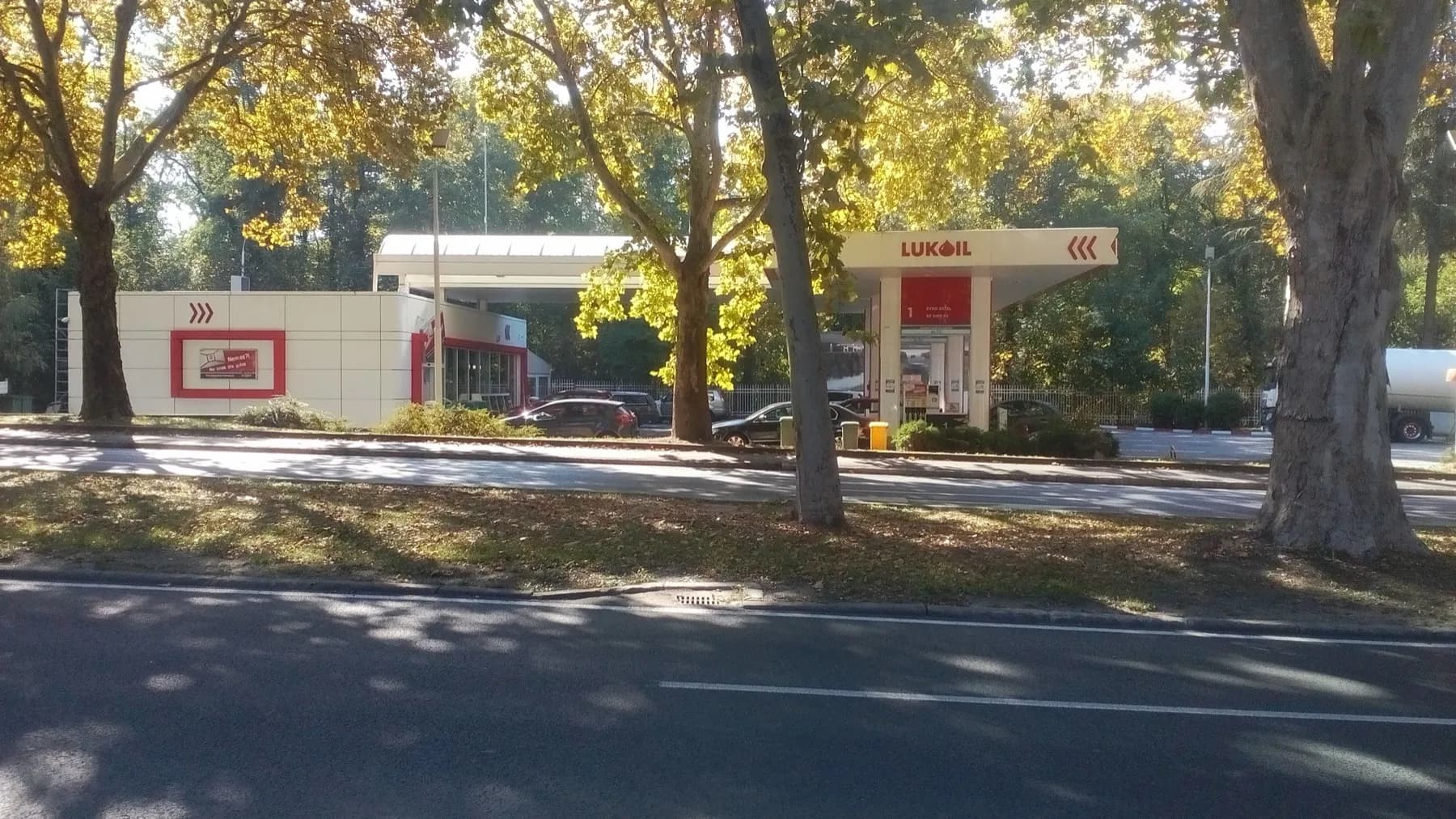
Main image: A Lukoil filling station in Belgrade, Serbia, photographed in October 2019. Photo: GennadyL / Wikimedia Commons, CC0.
Related Topics
EUReflect News
Site Administrator
Follow EUReflect
See more of our reporting on Google
Mark EUReflect as a preferred source and our stories are ranked higher for you in Top Stories, Discover and Google News — and carry a “preferred” badge when they are cited in AI results.
Add EUReflect as a preferred source