EU Builds New Economic Bridges
Brussels is signing deals from Latin America to Southeast Asia, with the Mercosur pact now in force and negotiations with India, Australia and Mexico concluded.
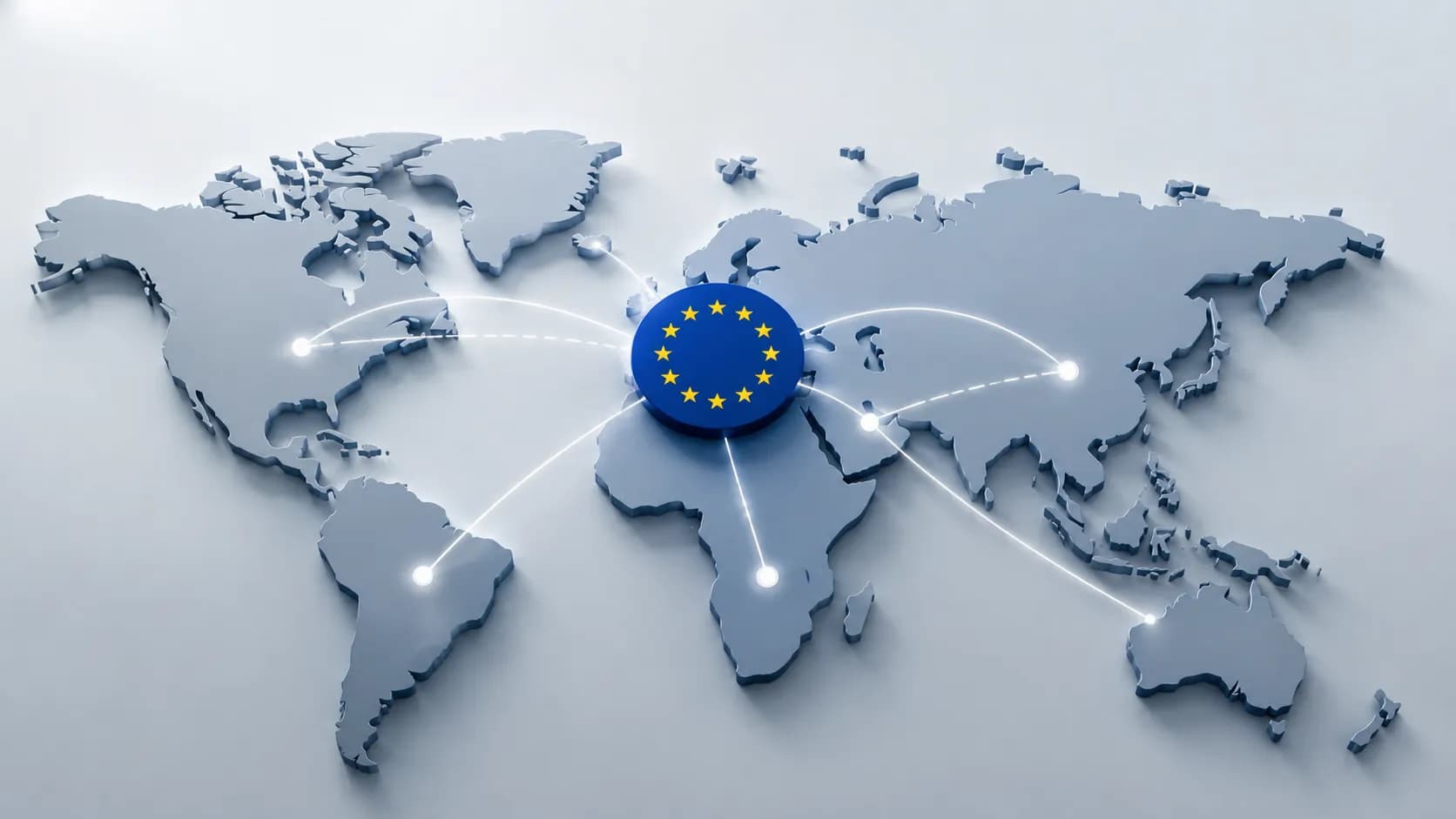
The European Union is rapidly expanding its economic relationships with regional organizations outside Europe as geopolitical tensions, supply-chain vulnerabilities and competition between major powers reshape global trade.
In 2026, Brussels is pursuing a broader strategy that reaches from Southeast Asia and Latin America to Africa and the Gulf. The objective is no longer simply to increase European exports. The EU increasingly views trade agreements, infrastructure investment, energy partnerships and access to critical raw materials as instruments of economic security.
Recent developments show that this strategy is accelerating.
The EU-Mercosur interim trade agreement began provisional application on May 1, negotiations with India and Australia have been concluded, an updated agreement with Mexico was signed in May, and Brussels is simultaneously advancing negotiations with several Southeast Asian and Gulf partners.
ASEAN: Europe Looks Toward Asia
The Association of Southeast Asian Nations has become one of the most important elements of Europe's diversification strategy.
ASEAN and the EU together represent around 20% of global GDP and approximately one quarter of world trade. The EU is ASEAN's third-largest trading partner and its second-largest source of foreign direct investment, with European FDI stocks exceeding €330 billion as of 2024.
Europe's approach to Southeast Asia is increasingly based on individual trade agreements that could eventually support wider region-to-region integration.
The EU already has agreements with Singapore and Vietnam. Negotiations with Indonesia have been concluded, while talks are continuing with Thailand, Malaysia and the Philippines.
Brussels also aims to mobilize up to €10 billion through Global Gateway investments in Southeast Asia, particularly in digital connectivity, clean energy, transport, education and climate resilience.
For Europe, ASEAN offers rapidly growing consumer markets and manufacturing networks. For Southeast Asian countries, Europe provides investment, technology and an alternative economic partner alongside China and the United States.
Mercosur Opens a Major Latin American Market
The EU's relationship with Mercosur has entered a historic new stage.
The interim EU-Mercosur trade agreement began provisional application on May 1, 2026, creating new market access between Europe and the South American bloc.
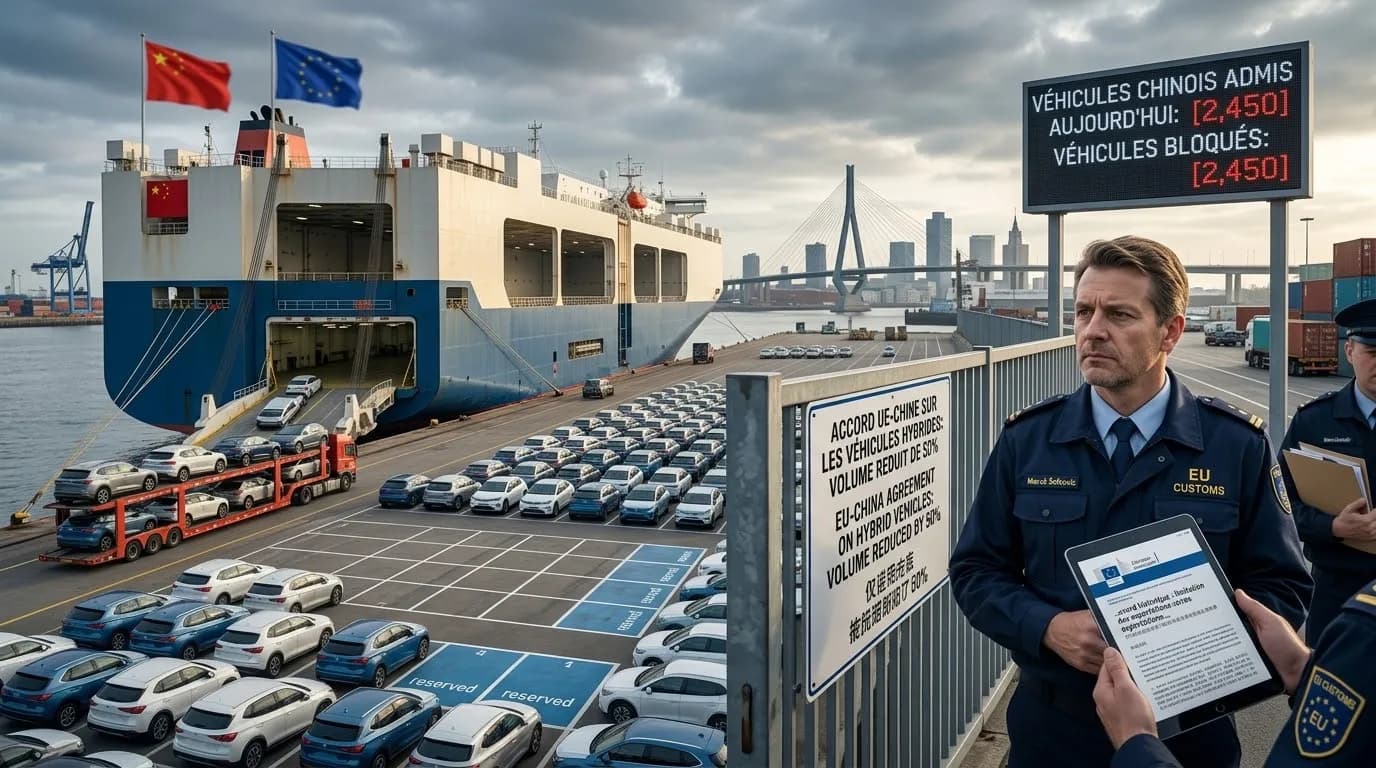
Tariffs on European electric and hybrid vehicles entering Mercosur immediately fell from 35% to 25%, while duties on conventional vehicles were reduced from 35% to 17.5%. Tariffs affecting machinery, industrial equipment and automotive components are also scheduled to be progressively dismantled.
The agreement gives European manufacturers greater access to South America's largest economies while strengthening Europe's connections with a region rich in agricultural commodities, minerals and energy resources.
It also reflects a wider European objective: reducing excessive economic dependence on a limited number of global markets.
CELAC: Investment Beyond Trade
Europe's relationship with Latin America extends well beyond Mercosur.
The EU maintains association, trade or political cooperation agreements with 30 of the 33 countries belonging to the Community of Latin American and Caribbean States, or CELAC.
EU-CELAC trade in goods exceeded €290 billion in 2024, representing growth of more than 52% over the previous decade.
Investment has become equally important.
Through the EU-Latin America and Caribbean Global Gateway Investment Agenda, European institutions and member states have committed approximately €45 billion until 2027.
More than 100 projects are included, focusing on green energy, digital transformation, health, infrastructure and sustainable economic development.
Mexico provides another example of this expanding relationship. The EU and Mexico signed their Modernised Global Agreement and an Interim Trade Agreement in May 2026. Annual trade in goods and services between the two sides already exceeds €100 billion.
GCC: Energy Meets European Technology
The Gulf Cooperation Council represents another strategically important relationship.
The six GCC states — Saudi Arabia, the United Arab Emirates, Qatar, Kuwait, Bahrain and Oman — recorded €165.7 billion in goods trade with the EU in 2025.
The EU was the GCC's second-largest trading partner, while the Gulf represented the EU's sixth-largest trading partner and sixth-largest export destination.
Historically, the relationship has been heavily influenced by energy.
That structure is changing.
Europe increasingly sees Gulf countries as investment partners in renewable energy, green hydrogen, technology, logistics and critical raw materials, while Gulf sovereign wealth and private investment have become important sources of capital for European businesses.
The UAE is at the centre of this transformation.
EU-UAE goods trade is worth around €55 billion, while bilateral services trade amounts to approximately €39 billion. EU investment in the UAE has reached around €186 billion.
Brussels and Abu Dhabi are now negotiating what could become the EU's first free trade agreement with a Gulf country. A sixth negotiating round has already been completed, and both sides are seeking progress toward an agreement in 2026 despite continuing geopolitical instability in the Middle East.
Africa: Trade Meets Infrastructure
Europe's economic relationship with Africa follows a different model.
Rather than focusing exclusively on traditional free-trade agreements, the EU combines trade with infrastructure financing, development programs, energy projects and investment partnerships.
West Africa provides a clear example.
Trade between the EU and West Africa reached approximately €68 billion in 2025, making the EU the region's largest trading partner and West Africa the EU's largest trading partner in Sub-Saharan Africa.
In July 2026, Brussels also launched negotiations for a Sustainable Investment Facilitation Agreement with Côte d'Ivoire designed to encourage European investment while strengthening connections between foreign companies and local suppliers.
Energy cooperation is becoming another pillar of EU-Africa economic relations.
In June, European and African institutions advanced technical work on the African Single Electricity Market and Continental Power System Master Plan under the Africa-EU Green Energy Initiative. The objective is to develop a more integrated continental electricity system while supporting investment in Africa's energy infrastructure.
Europe Is Diversifying Its Economic Map
These partnerships reveal a fundamental change in European trade policy.
For decades, the EU's external economic strategy concentrated heavily on market access and tariff reduction.
The emerging model is broader.
Trade is increasingly connected with energy security, critical minerals, digital infrastructure, technology, supply chains, investment and geopolitical resilience.
The war in Ukraine, disruption in the Middle East and growing competition between the United States and China have reinforced this approach.
EU trade ministers explicitly emphasized in May that expanding Europe's preferential trade network is becoming essential for supply-chain resilience, competitiveness and economic diversification.
This explains why Brussels is simultaneously deepening economic relations with organizations and regional structures that have very different political and economic characteristics.
ASEAN offers manufacturing capacity and growing Asian markets. Mercosur provides access to South American markets and commodities. CELAC expands Europe's investment footprint across Latin America. The GCC combines energy resources with enormous investment capacity, while Africa offers rapidly expanding markets, renewable-energy potential and infrastructure opportunities.
The common objective is diversification.
Europe is attempting to build an economic network in which it remains connected to the United States and China but is less dependent on either.
In this emerging system, the EU's greatest economic advantage may not be dominance over any single region. It may instead be its ability to build economic bridges between several of them.
Ahmet Balakan
Contributing writer at EUReflect.
Follow EUReflect
See more of our reporting on Google
Mark EUReflect as a preferred source and our stories are ranked higher for you in Top Stories, Discover and Google News — and carry a “preferred” badge when they are cited in AI results.
Add EUReflect as a preferred source