Neutrality as an Economic Strategy: Cases of Turkmenistan, Switzerland, and Austria
This study examines the economic implications of permanent neutrality through a comparative analysis of Turkmenistan, Switzerland, and Austria. Findings show that neutrality functions not only as a political stance but also as a strategic economic asset. Turkmenistan leverages neutrality to enhance energy diplomacy and secure multi-vector export routes; Switzerland transforms it into a global reputation for financial stability and innovation; and Austria combines political neutrality with EU economic integration, positioning itself as a regional diplomatic and economic hub. Overall, neutrality strengthens credibility, supports diversified partnerships, and contributes to long-term economic resilience.
1. Introduction
Permanent neutrality is often examined through the lenses of security studies, diplomacy, and international law; however, it also functions as a strategic economic instrument that shapes national development trajectories, foreign trade relations, and investment flows. This article provides a comparative assessment of three internationally recognized permanently neutral states—Turkmenistan, Switzerland, and Austria—with a focus on the economic implications of their neutrality policies. The analysis demonstrates that neutrality, beyond its geopolitical meaning, constitutes an economic asset that fosters international credibility, diversified partnerships, and sustained macroeconomic stability.
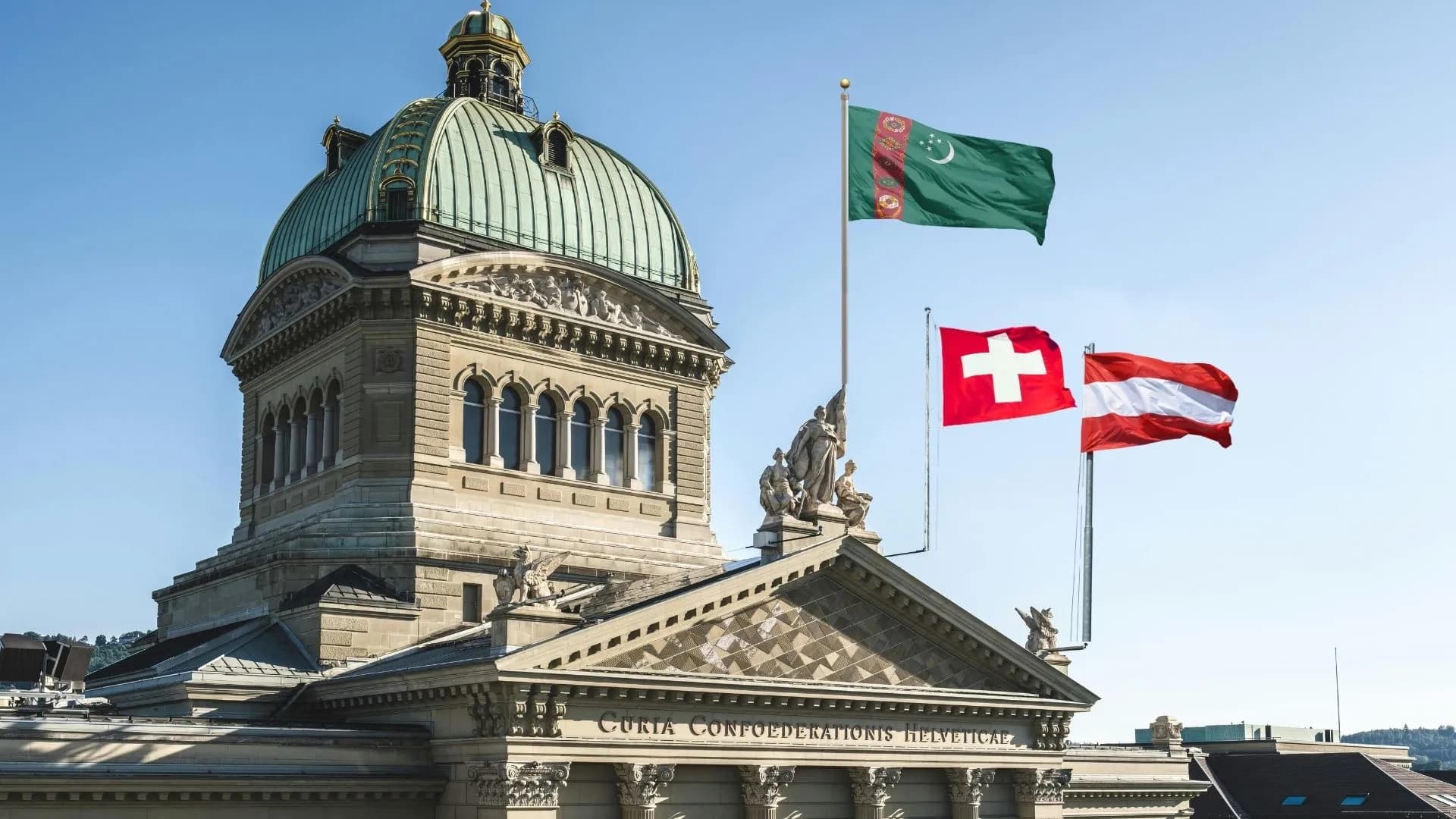
Neutrality represents not only a deliberate decision to abstain from military alliances but also the construction of a distinct economic identity within the global system. Turkmenistan, whose permanent neutrality was recognized by the United Nations in 1995; Switzerland, neutral since the 1815 Congress of Vienna; and Austria, which adopted constitutional neutrality in 1955, exemplify different paths through which neutrality can be transformed into economic advantage. Their approaches vary according to geography, resource endowment, and the degree of integration with global and regional markets.
2. Turkmenistan: Neutrality as a Strategic Component of Energy Economics
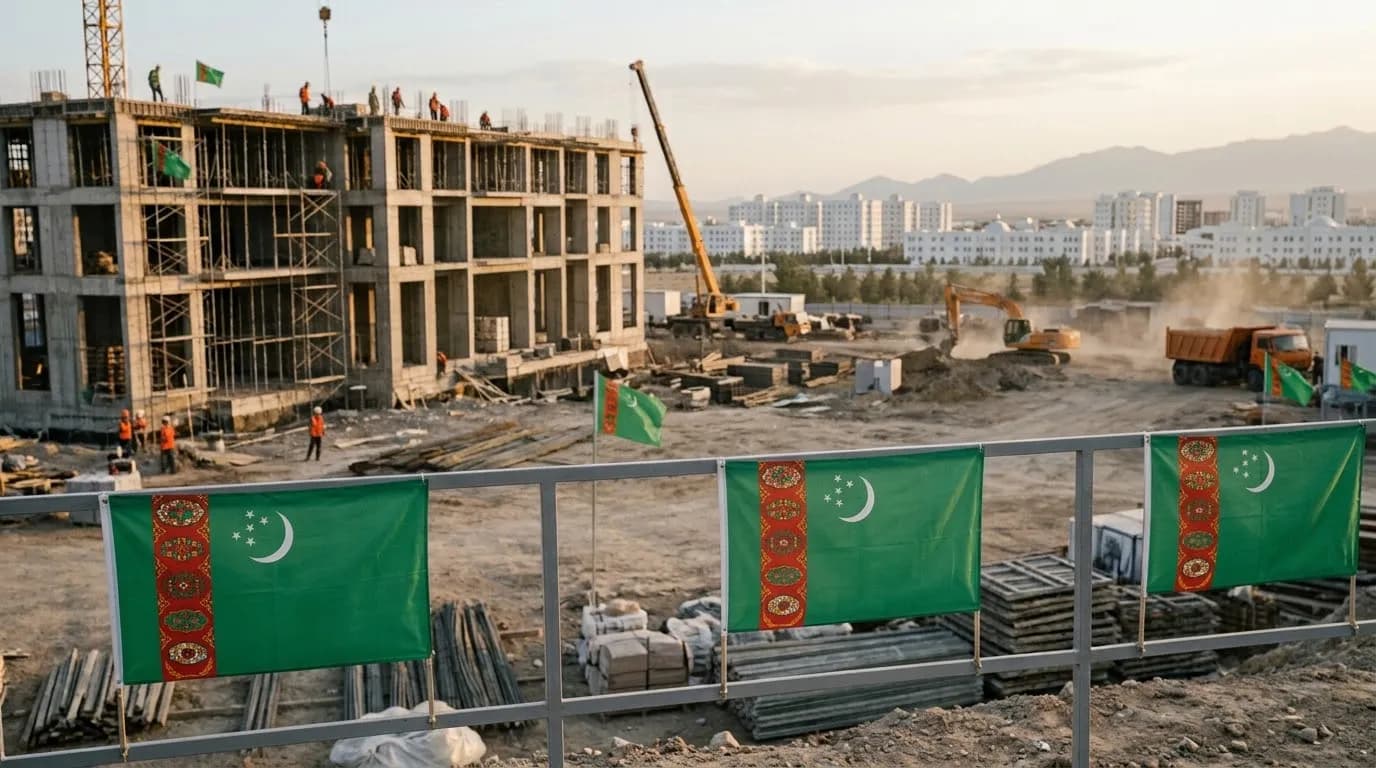
Turkmenistan employs its neutral status as a core instrument of energy diplomacy within a hydrocarbon-driven economic structure.
2.1. Hydrocarbon-Based Economic Strategy
Possessing one of the world’s largest natural gas reserves, Turkmenistan leverages neutrality to:
- Implement multi-vector export policies toward China, Türkiye, Russia, Iran, and potential EU markets;
- Reduce geopolitical risk perceptions and enhance credibility in pipeline negotiations;
- Maintain a balanced position between Eastern and Western energy consumers.
2.2. Investment Climate and Neutrality-Driven Development
Neutrality contributes to:
- A predictable investment environment in energy, transport, and infrastructure;
- Turkmenistan’s positioning as a peaceful and reliable transit hub in Central Asia.
- Although state dominance in the domestic economy constrains full integration into global markets, neutrality reinforces the country's image as a stable and dependable supplier, strengthening its external economic engagements.
3. Switzerland: Transforming Neutrality into a Global Brand of Trust and Innovation
Switzerland stands as the most prominent example of a state that converts neutrality into a powerful economic and institutional advantage.
3.1. Trust-Based Financial Architecture
Switzerland’s long-standing neutrality has enabled the country to:
- Build a reputation for legal predictability and political stability;
- Emerge as a leading global banking and financial center;
- Attract multinational corporations seeking a low-risk business environment.
3.2. Innovation and High-Value Production
The stability afforded by neutrality has allowed Switzerland to:
- Avoid major wartime economic disruptions in Europe,
- Channel accumulated capital into research and innovation,
- Achieve global leadership in pharmaceuticals, biotechnology, precision manufacturing, and financial technologies.
This demonstrates that neutrality can underpin an innovation-driven, high-trust economic model with strong resilience in global markets.
4. Austria: A Neutral State Positioned as an Economic Bridge in Europe
Austria’s neutrality, adopted in 1955, supports an economic model characterized by deep integration within the European Union combined with a politically neutral orientation.
4.1. Compatibility of EU Integration and Neutrality
Austria maintains military neutrality while:
- Participating fully in the EU single market,
- Benefiting from high levels of trade and regulatory harmonization,
- Strengthening investor confidence through stable and predictable economic governance.
This framework enables Austria to pursue a hybrid model: politically neutral yet economically integrated.
4.2. Vienna as a Diplomatic and Economic Hub
Neutrality enhances Austria’s capacity to:
- Host major international organizations such as the OSCE and OPEC Fund,
- Serve as a key platform for East–West diplomatic and economic engagement,
- Attract consistent flows of foreign direct investment.
Thus, Austria’s model combines neutrality with a strategic role as a regional economic and diplomatic corridor.
5. Conclusion
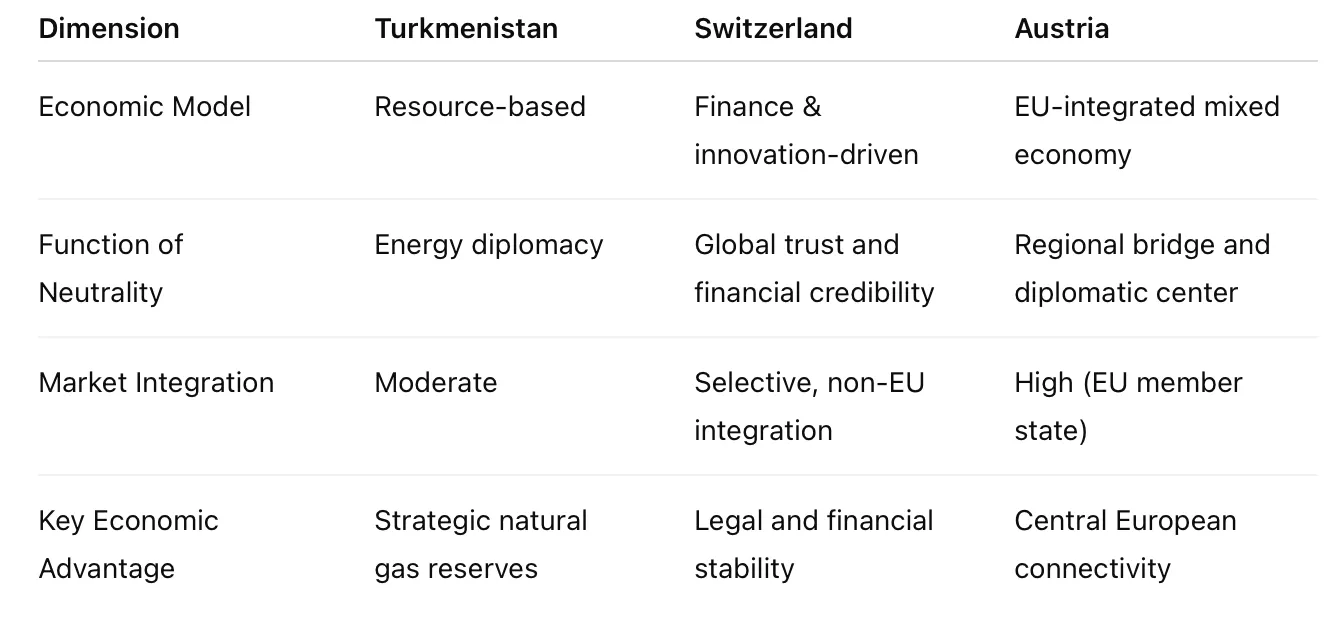
Permanent neutrality functions as a multidimensional strategic asset that influences both economic policy and international engagement. The cases of Turkmenistan, Switzerland, and Austria demonstrate that neutrality can enhance investment attractiveness, support diversified international partnerships, and strengthen economic resilience.
Despite their differing economic structures and geopolitical environments, all three countries illustrate a common outcome: When aligned with national strengths—energy diplomacy in Turkmenistan, financial reliability in Switzerland, and regional connectivity in Austria—neutrality becomes a catalyst for economic stability and global relevance.
Zhansaya Nurlanovna
Contributing writer at EUReflect.
Follow EUReflect
See more of our reporting on Google
Mark EUReflect as a preferred source and our stories are ranked higher for you in Top Stories, Discover and Google News — and carry a “preferred” badge when they are cited in AI results.
Add EUReflect as a preferred source