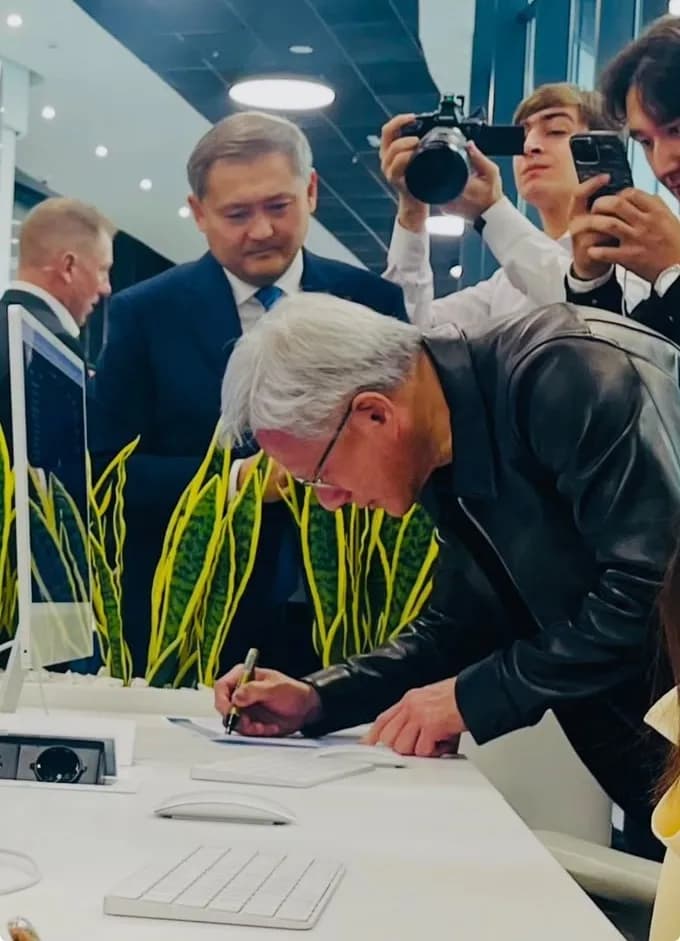
NVIDIA founder and CEO Jensen Huang’s first visit to Kazakhstan brought AI education and the next generation of researchers into focus. At alem.ai in Astana, Minister of Science and Higher Education Sayasat Nurbek introduced Huang to QAIRU, a new university launched this year with a focus on artificial intelligence and advanced research.
Digital platforms handled 86 percent of online retail sales, led by Kaspi.kz, Ozon, Wildberries, Halyk Market and Forte Market, concentrating the market among a handful of players.
This interview is conducted between Dr. İsmail POLAT, Director of the Türkiye Desk at Business Diplomat, and Prof. Dr. Mehmet Emin ERENDOR, one of Türkiye’s distinguished academics.
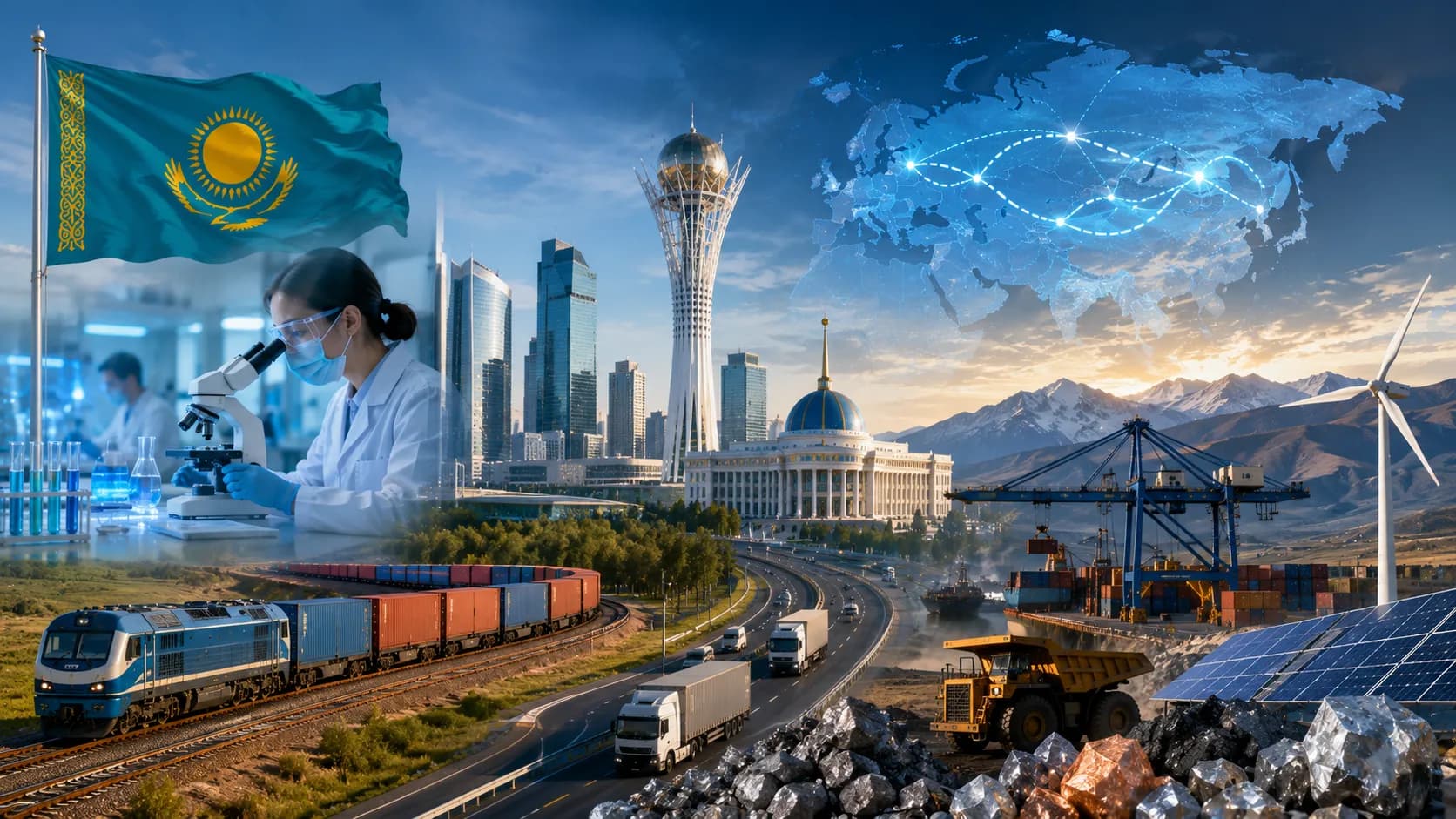
Kazakhstan's strategic position and critical minerals are drawing global attention, with a new documentary underscoring its potential as a bridge between Asia and Europe.
Latvia's EU-backed investments are shifting from basic digital services to deep tech, including a federal cloud and advanced digital skills, as part of its recovery plan.
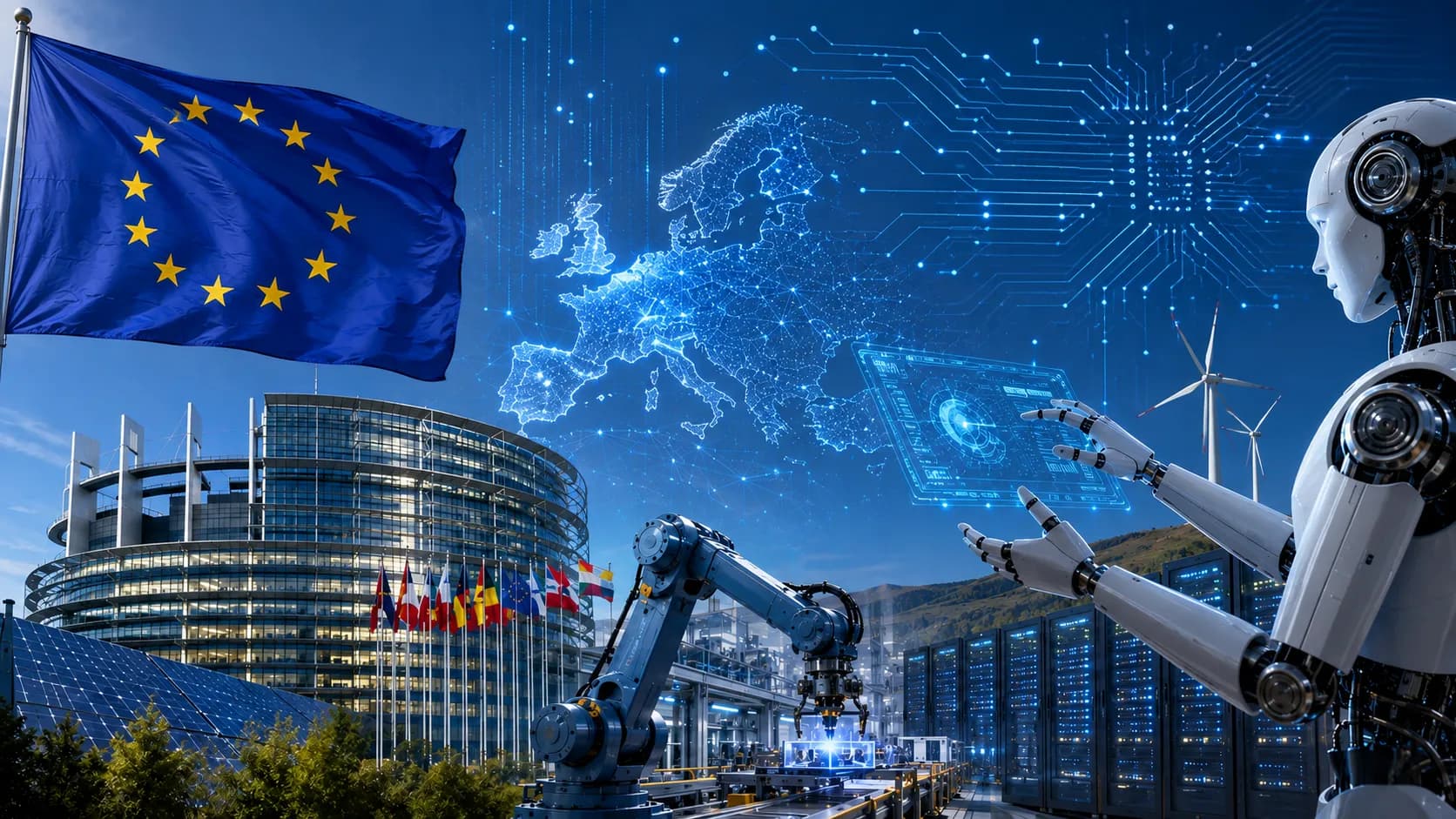
The EU's new AI Gigafactories initiative will channel up to €10 billion in public funds, aiming to mobilize an additional €20 billion from private investors.
The EU aims to mobilize over €30 billion for up to seven AI Gigafactories, each with more than 100,000 advanced processors, to boost computing power within the bloc.
Azerbaijan's digital reforms have cut China-Europe transit times from 38-53 days to 12-18, but coordination gaps and infrastructure limits still pose challenges.
Digital finance is transforming emerging economies by expanding access to banking, savings, payments, and credit through mobile technology. While financial inclusion and economic growth are accelerating, challenges such as cybersecurity, digital literacy, infrastructure gaps, and inactive accounts continue to limit its full potential.
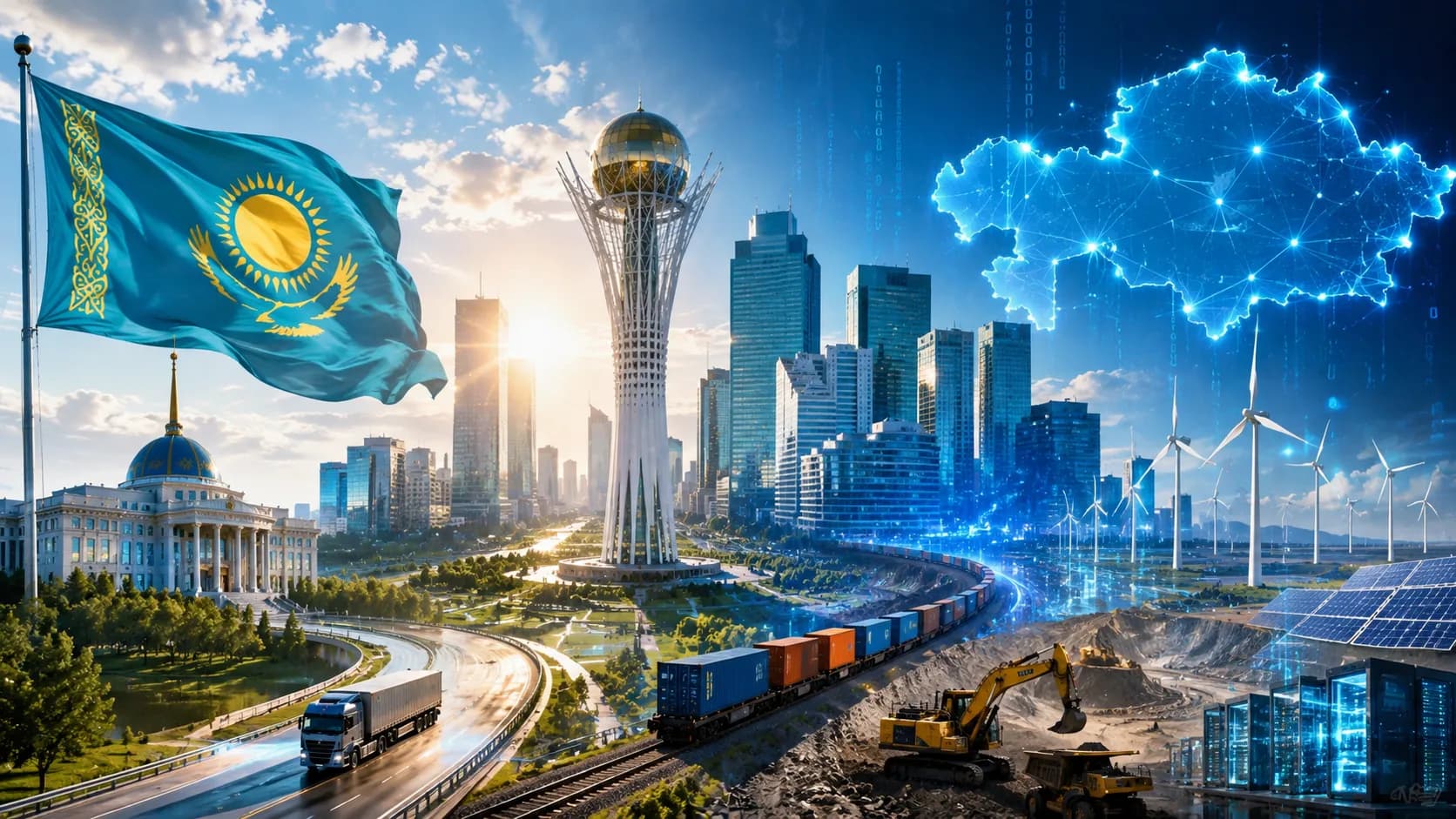
Kazakhstan reaffirmed its ambition to become Central Asia’s leading investment hub through constitutional reforms, AI-driven growth, and economic diversification. While rising FDI and digital transformation strengthen its position, long-term success will depend on transparency, institutional credibility, and reducing commodity dependence.
Technology has become a core source of power and sovereignty in modern geopolitics. Tech sovereignty refers to a nation’s independent control over data, AI, and digital infrastructure. Its absence creates security and economic risks, while states respond through digital borders, local ecosystems, and strategic investments.
Ashgabat 2045 is a long-term strategy to transform Turkmenistan’s capital through smart city technologies, digital governance, infrastructure modernization, and international cooperation. The framework seeks to improve urban management, sustainability, and regional connectivity.
China has introduced draft rules to regulate AI-generated “digital humans.” Content must be clearly labeled, harmful services targeting minors will be banned, and unauthorized use of personal data restricted, aiming to balance innovation with safety.
Kazakhstan’s Artificial Intelligence University marks a strategic shift toward a knowledge-based economy. Combining education, research, and industry, it aims to boost innovation, reduce brain drain, and strengthen technological sovereignty while maintaining human-centered learning and critical thinking.
Europe is losing its self-proclaimed role as a global innovation leader, relying on regulation instead of ambition as faster-moving regions—especially the U.S., East Asia, and increasingly Central Asia—build technological capacity at scale. While the EU over-regulates emerging technologies and remains dependent on foreign powers for critical resources, cloud infrastructure, semiconductors, and AI, countries like Kazakhstan, Uzbekistan, and Azerbaijan rapidly modernize, experiment, and seek genuine partnerships. Europe’s fragmented collaboration culture, risk-averse mindset, and neglect of entrepreneurial principles from thinkers like Mises, Hayek, and Schumpeter have deepened its stagnation. To regain strategic relevance, Europe must rebuild industrial capacity, embrace innovation, and form deeper alliances—particularly with Central Asia, a region offering raw materials, speed, geopolitical leverage, and a strong appetite for cooperation. Without decisive action, Europe risks becoming a well-regulated but strategically irrelevant continent.
Turkmenistan is positioning itself as a regional innovation hub with the launch of CIET 2025 — the International Conference & EXPO on the Development of the Construction, Industrial, Chemical and Energy Sectors — held in Avaza, the country’s Caspian coastal zone. The event brings together delegates from 55 countries, including major firms such as Mitsubishi Heavy Industries, Çalık Holding, ROSATOM, POSCO International, and DAMAC Properties, to discuss technology, investment, and sustainable development. Analysts say CIET 2025 marks Turkmenistan’s effort to integrate into global innovation networks and attract renewable energy, digital infrastructure, and transport investments, reinforcing its role as a strategic link in Central Asia’s economic transformation.
Qatar is undertaking a major national transformation, led by the Third National Development Strategy (2024–2030), to become a global hub for technology, entrepreneurship, and smart living.
On July 16, 2025, Kazakhstan and Hungary strengthened their strategic partnership in digitalization and space technologies. Deputy Foreign Minister Alibek Kuantyrov met with 4iG Plc. Chairman Gellért Jászai to advance cooperation in telecommunications, satellite systems, and innovation.