The Palestinian issue has remained one of the most complex and enduring problems in the international system since the early 20th century. Understanding the European Union’s policy on Palestine requires examining not only the balance of power in the Middle East but also Europe’s own value system.
MDD is not a momentary emotional downturn; it is a persistent disturbance in brain chemistry, cognition, and social functioning that can fundamentally alter a person’s perception of life.
Energy security is not only about the continuity of access to resources but also about ensuring a sustainable balance between production and consumption in line with environmental and climate targets. Türkiye, driven by rapid population growth, industrialization, and economic expansion, faces a steadily increasing demand for energy. However, the way in which this demand is met directly shapes both short-term supply security and long-term development and climate policies.
This article explores Russia’s attempt to shape a Turkic-centered framework through the “Altai as the Homeland of the Turks” narrative and the “Greater Altai” project.
The hosting of the 43rd UNESCO General Conference in Samarkand in 2025 highlights Uzbekistan’s growing global influence in culture, education, and science. This historic event underscores the nation’s successful reforms, cultural diplomacy, and commitment to preserving world heritage while promoting intercultural dialogue and sustainable development.
The Digital Bridge 2025 International Tech Forum showcased Kazakhstan’s leadership in AI and digital transformation, with President Tokayev highlighting its role as a global platform for innovation and fostering international cooperation, including partnerships with Central Europe.
Regional budget talks are paralyzed by ideological gridlock, risking an estimated €1.5 billion deficit and forcing a spending freeze ("provisional twelfths"). Formateur Leisterh struggles as parties refuse to cut. The consequence: municipal projects stall, social services face underfunding, and Brussels' credibility erodes. Critics warn the capital lacks a coherent vision, living on borrowed time as debt piles up.
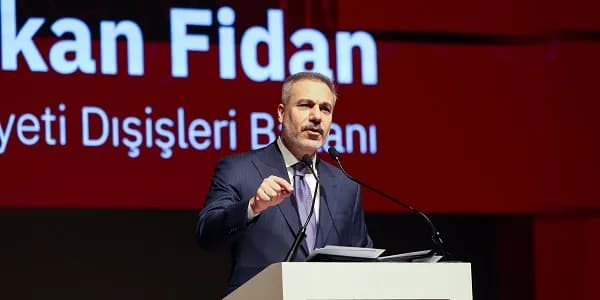
Türkiye’s ambitious national fighter project, KAAN, described domestically as a 100% indigenous fifth-generation multifunctional aircraft, faces a critical obstacle: the United States has refused to grant licenses for certain technologies used in its production. This development, highlighted by Foreign Minister Hakan Fidan, raises fundamental questions: Is KAAN truly a fully indigenous product, or is Türkiye still reliant on external suppliers? Does this situation indicate strategic tension between Ankara and Washington, or could it reflect a broader geopolitical maneuver targeting third countries? This article examines the roots of the licensing issue, explores the structural dependency embedded in the global defense supply chain, and evaluates Türkiye’s potential alternatives. The findings suggest that Türkiye stands at a strategic crossroads where decisions on technological independence will define its long-term military and political autonomy.
Türkiye is entering a decisive phase in its nuclear energy policy with its commitment to develop and deploy Small Modular Reactors (SMRs). Recognized globally as one of the most significant innovations in nuclear technology, SMRs provide advantages in cost efficiency, flexibility, safety, and scalability compared to traditional reactors.
Israeli media reports claimed that nearly half of those detained were not humanitarian volunteers, but individuals connected to various foreign intelligence agencies.
The confrontation between U.S. President Donald Trump and Israeli Prime Minister Benjamin Netanyahu is not just a personal clash between two leaders, but a turning point that has reshaped power balances in the Middle East.
President Kassym-Jomart Tokayev’s official visit to Türkiye strengthened Kazakhstan–Türkiye strategic ties, covering trade, investment, logistics, energy, IT, education, and cultural cooperation.
Mayor's costly re-election campaign leaves a commune facing a €60M financial abyss, depleted reserves, and mandatory regional tutelage. Opportunistic alliances masked a structural collapse.
Russia's 2008 Georgia war and 2014 Crimea annexation were early warnings, yet Europe's energy dependence on Moscow left it vulnerable to the Ukraine crisis.
EUReflect had the pleasure of attending the cultural soirée “Independence Treasures: A Celebration of Turkmen Heritage”, hosted by H.E. Ambassador of Turkmenistan Sapar Palvanov and Mrs. Yelena Kharitonova, Founder of the Central-Asian European Creative Alliance.
For the first time in more than half a century, Syrians are preparing to witness something their country has been denied for decades: a genuine People’s Assembly.
ArmUnion's New Year's Eve celebration, co-organized with post-Soviet associations, featured traditional Armenian dishes with halal and vegan options to ensure inclusivity.
President of Uzbekistan advocates for solidarity, open dialogue and close cooperation between the countries of the world. On September 23, general political debates of the 80th anniversary session of the UN General Assembly commenced at the United Nations headquarters in New York City, where President of the Republic of Uzbekistan Shavkat Mirziyoyev delivered a speech.